Why HOAs regulate Christmas lights
HOA Christmas light rules exist for practical reasons. Property value protection: consistent neighborhood aesthetics maintain home values. Neighbor consideration: extreme displays can cause light pollution into adjacent properties. Safety: poorly installed lights create fire risks for shared walls in townhomes.
Brand consistency: master-planned communities with branded aesthetics enforce visual cohesion. Most rules are reasonable. Some are extremely restrictive. All of them are enforceable through HOA fines, liens, and in extreme cases legal action.
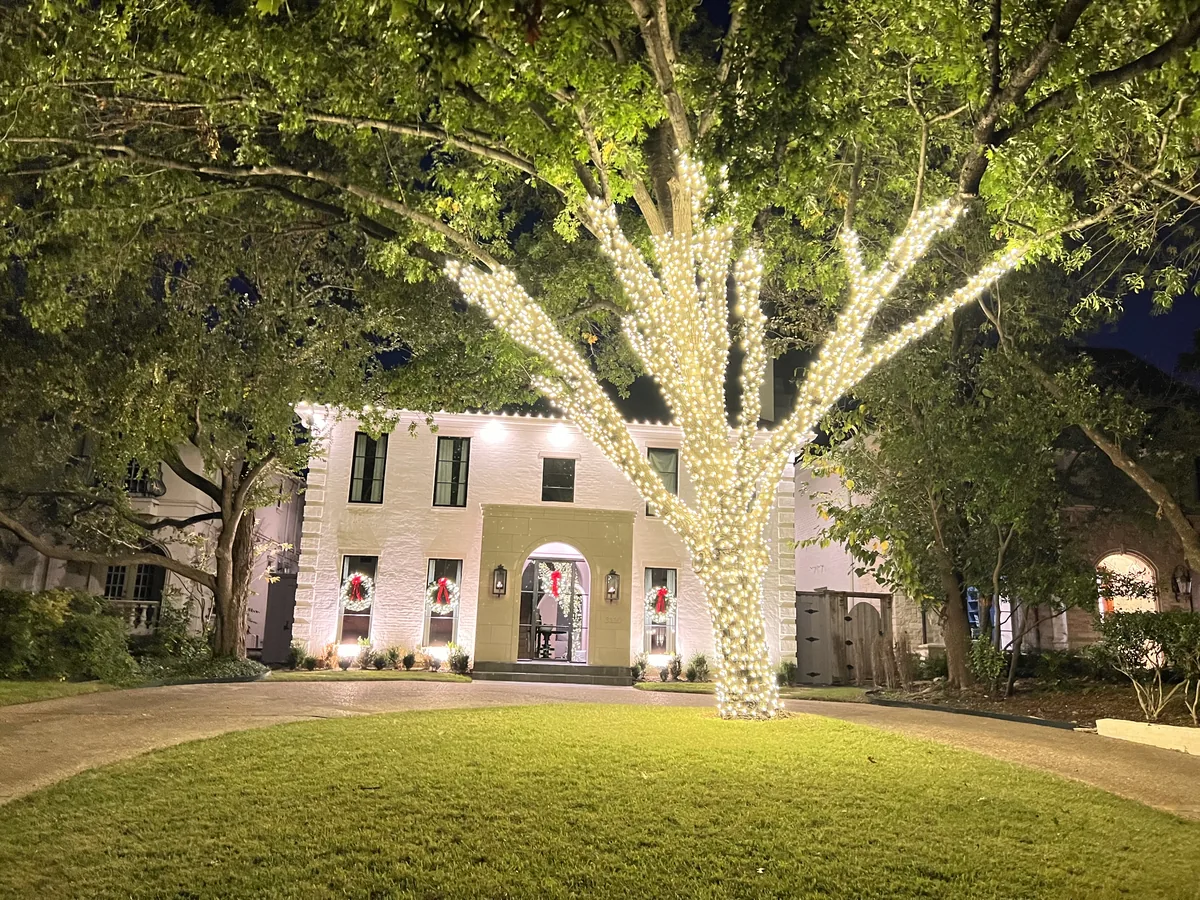
Most DFW HOAs allow holiday lighting within a set window with limits on color, brightness, and timing. Check your covenants for the put-up and takedown dates before you design — it saves a violation notice in January.
Typical HOA Christmas light rule categories
Most DFW HOAs regulate five main categories of holiday lighting. Timing restrictions specify when lights can be installed and must be removed (typically allowing installation from late October or early November through early-to-mid January). Style restrictions specify allowed types (e.g., white only, no inflatables, no projections, no multi-color blinking).
Brightness/wattage restrictions limit total electrical load or specific bulb types. Coverage restrictions limit which parts of the property can be lit (e.g., only the front-facing exterior). Material restrictions require certain quality standards or prohibit certain attachment methods (e.g., no roof penetrations).
DFW HOA tiers: strict to permissive
DFW HOAs fall roughly into three categories of strictness. Strict (Park Cities historic neighborhoods, some Highland Park subdivisions, established Stonebriar): white-only or warm-white-only, no inflatables, no projections, traditional design only, removal by mid-January enforced.
Moderate (most master-planned communities like Phillips Creek Ranch, Stonebridge Ranch, Bridlewood): allow multicolor but no flashing, allow standard decorations, removal by end of January, reasonable enforcement. Permissive (some older suburban communities, rural Lucas/Parker estate areas, newer master-planned with minimal restrictions): nearly anything allowed within fire safety guidelines, removal expected but not strictly enforced.
How to find your specific HOA's rules
Start with your HOA's official documents. The Declaration of Covenants, Conditions and Restrictions (CC&Rs) is the foundational document with most rules. Architectural guidelines or design standards documents often have decoration-specific sections. The HOA website usually has current rules and FAQs.
Newer master-planned communities often have detailed digital documentation. Established neighborhoods may only have paper documents requiring contact with the HOA management company. If you can't find rules clearly stated, email the HOA management directly and request the holiday decoration policy in writing — keep that email as your reference if there's later dispute.
Common rule conflicts and how to handle them
Even careful homeowners encounter occasional rule conflicts. Conflict: your installer suggests beautiful multicolor C9 LED, but your HOA requires warm-white-only. Resolution: ask your installer for warm-white equivalent — the aesthetic is still elegant and HOA-compliant. Conflict: you want roofline lights up the day after Halloween, but HOA prohibits installation before November 15.
Resolution: schedule installation date within HOA window — most professional installers respect HOA timing requirements. Conflict: you want to wrap your mature oak tree but HOA restricts tree decorations. Resolution: review CC&Rs carefully (often it's only commercial-grade wraps that are restricted, not professional residential), or appeal to HOA board with photos of comparable installations. Most reasonable requests are approved when professionally presented.
Working with professional installers who know HOAs
Experienced DFW professional installers know HOA rules in major communities — we've installed in hundreds of HOA properties across DFW. We can quickly tell you whether your design concept will comply with your specific HOA. We can adjust designs to fit HOA requirements while still creating great displays.
We can provide certificates of insurance and professional documentation HOA boards sometimes request. We can communicate directly with HOA boards on HOA review issues if needed. This expertise is genuinely valuable — DIY installers without HOA experience frequently install displays that get HOA violation notices, which can result in fines and required removal.
HOA appeal process if your design is rejected
If your HOA architectural review rejects part of your decoration plan, you have appeal options. Most HOAs have a written appeal process in their CC&Rs — usually a written request to the board with supporting evidence (photos of similar approved installations from your neighbors, your installer's credentials, neighbor support letters).
Texas Property Code provides some protection from arbitrary HOA enforcement — sometimes professional legal review of HOA rules reveals overreach. Most rejections are reversible with professional representation, comparable comp evidence, or design modifications that address the specific board concern. We've helped customers successfully navigate appeals on multiple occasions.
Specific DFW HOA notes
Some specific large DFW communities and their typical Christmas light approaches. Stonebriar Country Club (Frisco): allows traditional displays with quality requirements; multicolor allowed but tasteful. Stonebridge Ranch (McKinney): permissive within timing rules; popular for elaborate displays. Phillips Creek Ranch (Frisco): luxury aesthetic standards; warm-white predominantly; professional installation expected.
Vaquero Club (Westlake): strict architectural review; traditional displays only; professional installation required. Carillon (Southlake): luxury standards; mostly warm-white; HOA-engaged with decoration approvals. Bridlewood (Flower Mound): equestrian-themed community values traditional aesthetic. The Trails (Frisco): newer community with established but reasonable rules. Always verify current rules directly with your HOA — these change.
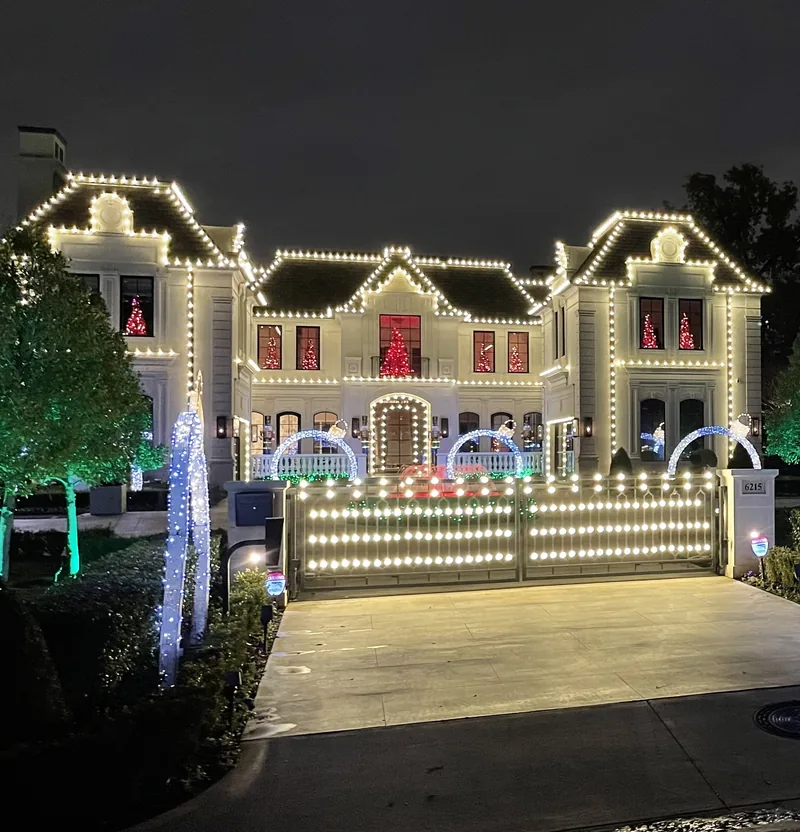
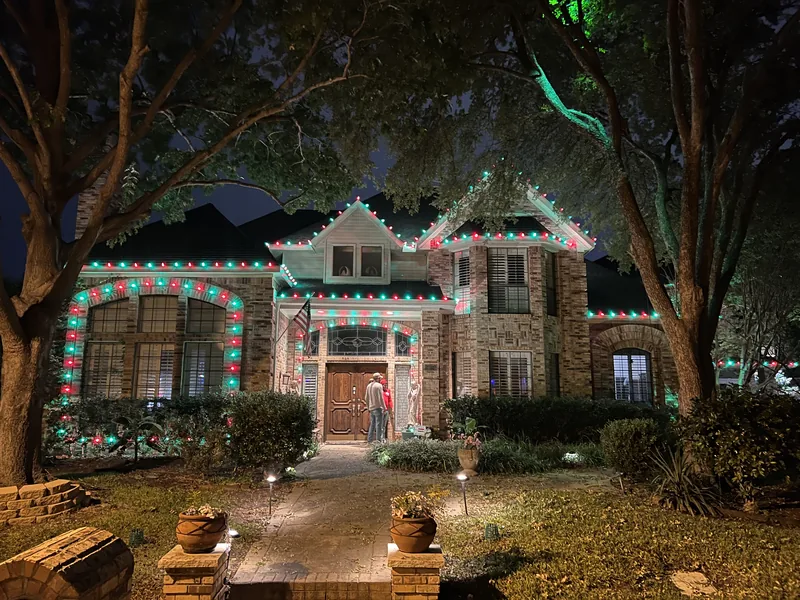
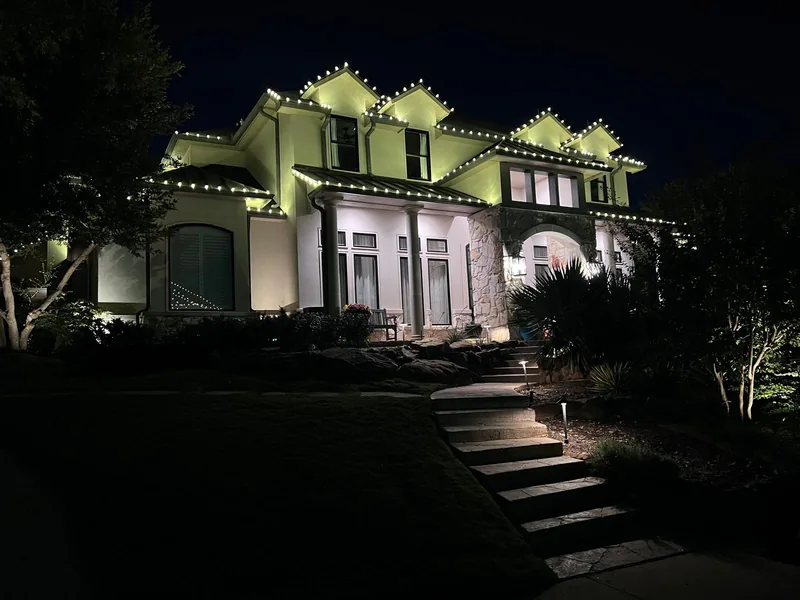
From single-story rooflines to tall two-story estates — every home professionally measured, installed, and taken down by our insured crews.
Frequently asked questions
What are the most common HOA Christmas light rules in DFW?
Most DFW HOAs regulate timing (installation late October-early November through mid-to-late January), style (often white-only or warm-white preference), brightness limits, coverage restrictions (front-facing only), and material/attachment requirements (no roof penetrations).
When can I install Christmas lights in DFW HOA communities?
Typical allowed window is late October or early November through early-to-mid January. Strict HOAs (Park Cities, Vaquero Club, some Stonebriar) often require installation no earlier than November 15 and removal by January 15. Always check your specific HOA's CC&Rs.
Can my HOA force me to remove Christmas lights?
Yes — HOAs can enforce decoration rules through written violation notices, fines (typically $25-$250 per day for ongoing violations), liens against your property for unpaid fines, and in extreme cases legal action. Most HOAs prefer voluntary compliance with reasonable warning periods.
Do all DFW HOAs allow multicolor Christmas lights?
No — many strict HOAs (especially in Park Cities, Vaquero Club, parts of Highland Park) require white or warm-white only. Most master-planned communities allow multicolor but prohibit flashing or rapidly changing patterns. Check your specific HOA's architectural guidelines.
Can a professional installer handle my HOA approval process?
Experienced DFW Christmas light installers know HOA rules across major communities and can adjust designs to comply with your specific HOA. We can also provide insurance documentation, professional credentials, and comparable installation evidence if your HOA requires architectural board approval.
What happens if my Christmas lights violate my HOA rules?
First, you'll receive a written violation notice with cure period (typically 10-30 days to remove or modify). If not addressed, fines begin accruing ($25-$250 per day depending on HOA). Unpaid fines can become liens against your property. In extreme cases, HOA can pursue legal removal and recover costs from homeowner.
Ready for your custom DFW holiday lighting?
15+ years experience · 1,000+ DFW homes · 4.9★ Google rated · fully insured
Three ways to get started today.
Phone or Text
Call or text us directly at (469) 970-2715. Real person, same-day response, no obligation. Often the fastest path to a detailed quote.
Call now →Email thechristmaslightsexperts@gmail.com with your address and brief description. We respond same-day with detailed itemized pricing.
Get a Fast Quote →Online Quote Form
Submit our online quote form with property details. Convenient for thorough information sharing. Same-day response guaranteed.
📋 Quote form →For a simple roofline question or you're planning a full multi-acre estate installation, we respond same-day with the information you need. No high-pressure sales, no obligation, no follow-up calls if you decide not to proceed. Just honest professional service — which is why 86% of our tracked 2024–25 customers booked us again for 2025–26.

Ready for a
professional display?
Tell us about your home and we'll respond same day with a custom design and quote — concierge service, zero hidden fees, no obligation.
Or call/text directly: (469) 970-2715
Ready to make your home unforgettable?
Free same-day quote. No obligation. We respond fast and treat your home like our own.
Ready for a flawless display?
We design, install, maintain, and take down custom Christmas lighting across Dallas, Plano, Frisco & DFW — fully insured, fully managed.
Get a Free Quote →