The real numbers on Christmas light injuries
Each holiday season in the United States, hospitals treat an estimated 14,000 injuries related to holiday decorating. Most come from ladder falls. The National Fire Protection Association reports an average of 770 home fires per year caused by Christmas lights and other decorative lighting, resulting in approximately 30 deaths, 120 injuries, and $13.4 million in direct property damage. These aren't rare freak accidents — they're predictable, preventable, and happen to careful homeowners every year. Understanding the real risks helps you make safer choices. And the safest option of all: let insured professional Christmas light installers handle the ladder work.
Most holiday-decorating injuries come from ladder falls, and electrical faults cause thousands of home fires every December. Outdoor-rated lights, GFCI outlets, and a spotter are non-negotiable — or hand the ladder work to insured pros.
The #1 risk: ladder falls
Ladder falls cause more Christmas light injuries than any other single cause. The combination of cold weather (less grip), shorter daylight hours (poor visibility), wet shingles, and the unfamiliar task of working on a roof creates compound risk. The Consumer Product Safety Commission reports that roughly 240 Americans are killed each year in ladder-related falls — many during holiday decoration season. Average ER visit cost for a ladder fall: $3,000-$15,000. Average hospital stay if there's a serious fall: $30,000-$80,000. The math of hiring a professional ($2,500 average) vs. the potential cost of a fall makes professional installation the financially smart choice — beyond the obvious safety benefit.
Electrical fire risks: how Christmas lights start house fires
Christmas light fires usually start from one of four causes. Damaged wire insulation (frayed cords, cracked sheathing from being stepped on or rodent-damaged) creates short circuits. Overloaded outlets (too many strands plugged into one circuit, especially older homes with original wiring) cause overheating. Cheap, non-UL-listed lights from discount stores or international websites bypass safety testing entirely. Outdoor lights installed without GFCI (ground fault circuit interrupter) protection lose their safety net against water-related shorts. The combination of any two of these factors dramatically increases fire risk.
Safety differences: DIY vs. professional installation
Professional installers use commercial-grade C9 LED with sealed gaskets and reinforced connectors specifically designed for outdoor use. We custom-cut every strand to fit exactly — no cobbled-together extension cords stretched across rooflines. Every installation is connected through proper GFCI protection. Power is distributed across multiple circuits to prevent overload. Wires are secured to non-damaging clips (no staples through wires — a leading fire cause). Every connection point is weatherproofed. The work is done from professional ladders by trained crews wearing safety harnesses on steep roofs. None of these specifications are optional in professional work — they're standard. DIY installation skips or compromises on most of them out of necessity.
Outdoor extension cord risks specifically
One of the most common DIY mistakes is running indoor-rated extension cords outside, or daisy-chaining multiple extension cords to reach distant trees and yard areas. Indoor-rated extension cords are not weatherproofed — moisture penetration causes shorts. Daisy-chained cords (one plugged into another) compound electrical resistance and create overheating points. The connection points between cords are not weatherproof and become failure points after the first hard rain. Professional installers use single-run, weatherproof outdoor-rated SPT-1 wire designed for this exact application. Every connection is properly sealed.
Old vs. new Christmas lights: when to replace
Christmas lights have a finite lifespan. Incandescent bulbs (still installed in many homes from older displays) generate heat that degrades the wire insulation over years of use. After 5-7 years of normal seasonal use, even quality residential Christmas lights become fire hazards as insulation cracks and wire connections corrode. LEDs run cool and last 10-15+ years, but the wire and connectors still age. As a rule: if you've been using the same strands for more than 5 years, replace them. If you can see any visible damage (cracks, fraying, discoloration), replace them immediately. Commercial-grade C9 LED lasts much longer than residential equivalents due to better construction.
DFW-specific risks: heat, hail, and squirrels
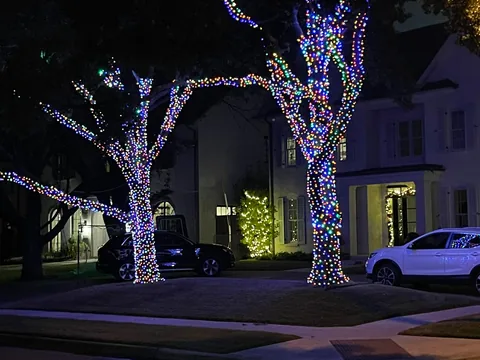
Texas weather creates unique challenges. Summer heat in attics and on roofs (where stored lights often live) accelerates plastic degradation. Hail damages exposed strands and connection boxes — even from minor storms. DFW squirrel populations chew through Christmas light wires (especially on tree wrapping) creating dangerous shorts. Brief but intense thunderstorms can saturate non-rated extension cords. None of these are theoretical — they're all common causes of light failures we see when customers call us mid-season to fix DIY installations that failed.
When to absolutely call a professional
Some scenarios make DIY installation genuinely dangerous. Multi-story homes (2nd-story rooflines and beyond) involve heights where a fall can be fatal. Steep-pitch rooflines (above 30 degrees) require professional safety equipment and training. Older homes with original electrical systems often can't safely handle large Christmas light loads — professionals can assess and properly route. Mature tree wrapping at heights above 20 feet requires bucket trucks or extension ladders most homeowners don't own. Estate-scale installations (1,000+ feet of total cable run) require electrical knowledge beyond DIY scope. If your situation matches any of these, the safety case for hiring a pro is overwhelming.
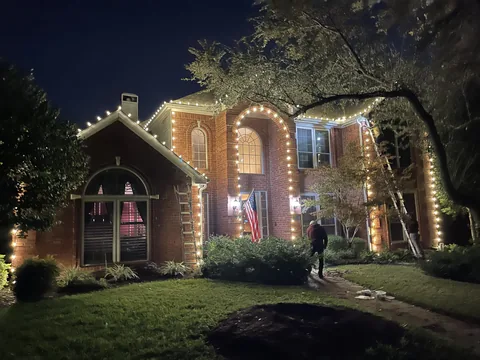
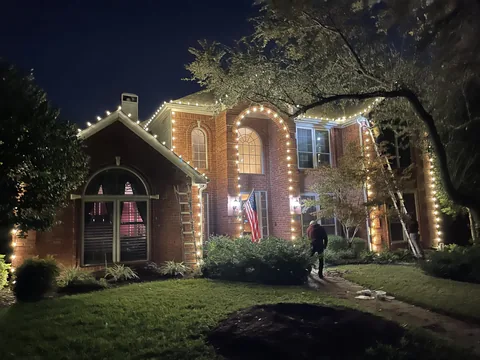
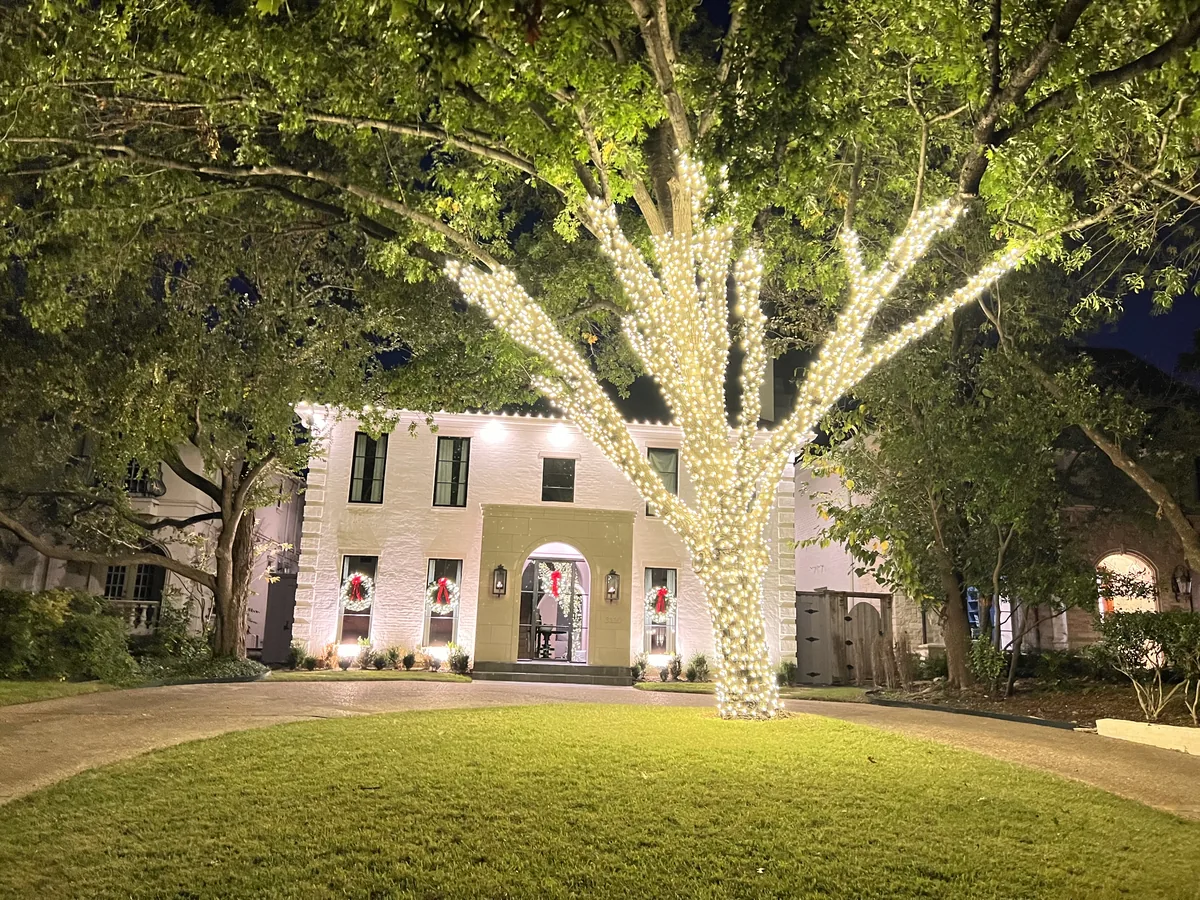
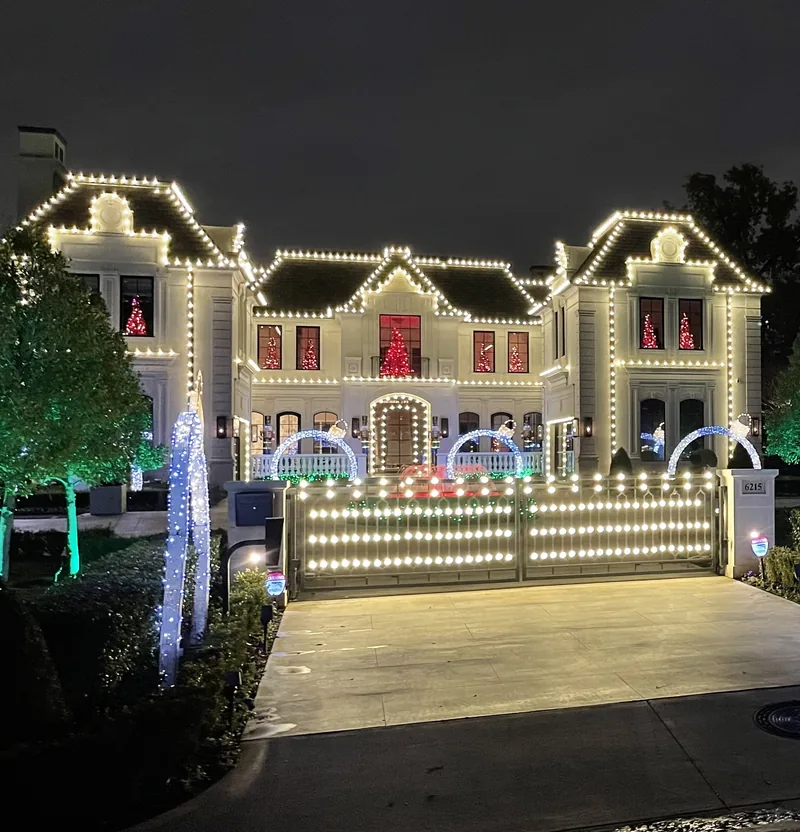
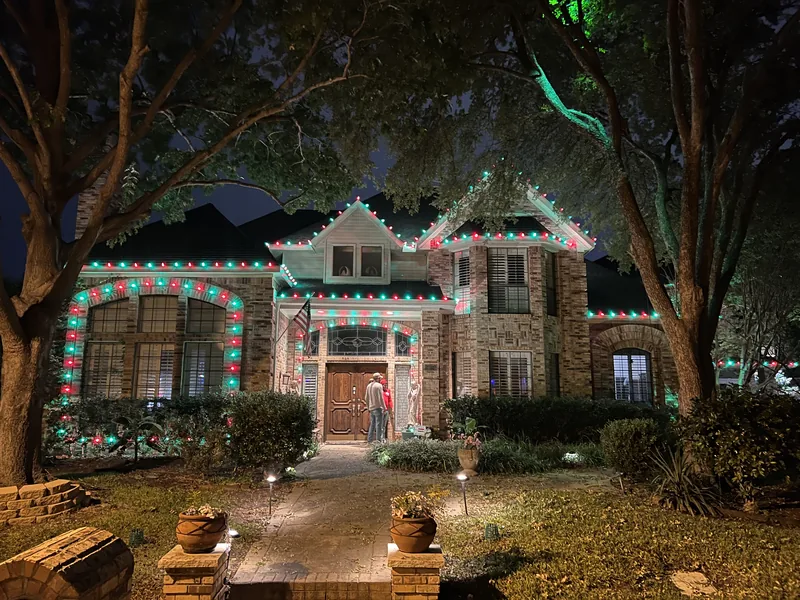
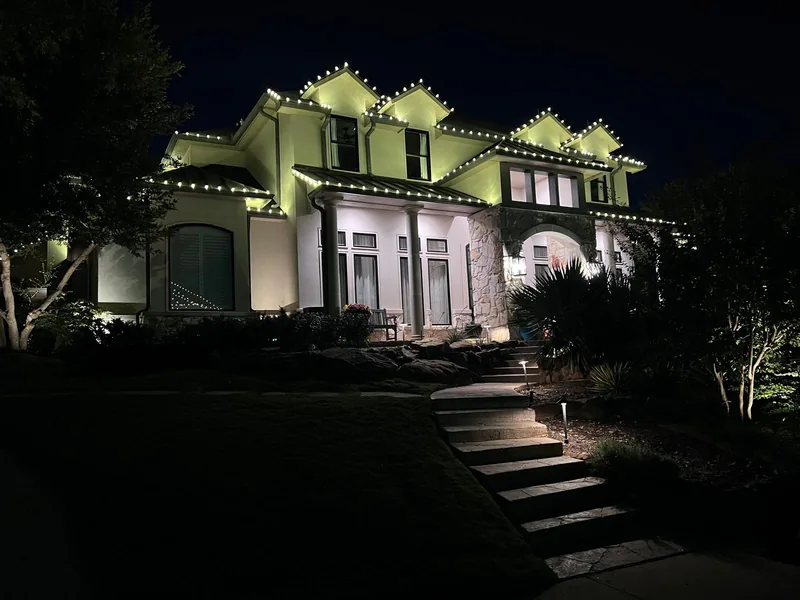
From single-story rooflines to tall two-story estates — every home professionally measured, installed, and taken down by our insured crews.
Frequently asked questions
How many house fires are caused by Christmas lights annually?
The National Fire Protection Association reports an average of 770 home fires per year caused by Christmas lights and decorative lighting, resulting in approximately 30 deaths, 120 injuries, and $13.4 million in direct property damage.
Is it safe to install Christmas lights on a steep roof?
Steep roofs (above 30 degrees) require professional safety equipment, harness systems, and training. Ladder falls cause more holiday season ER visits than any other single cause. Most DFW two-story homes have rooflines too steep for safe DIY installation.
How often should I replace Christmas lights?
Replace lights every 5 years for residential-grade strands, or immediately if you see any damage (frayed wires, cracked insulation, broken sockets). Commercial-grade C9 LED installed by professionals lasts 10-15+ years.
Why are outdoor extension cords dangerous for Christmas lights?
Indoor-rated cords aren't weatherproofed and short out when wet. Daisy-chained cords overheat at connection points. Single-run, weatherproof SPT-1 wire is the safe professional standard.
What's the safest type of Christmas light?
Commercial-grade C9 LED with sealed O-ring gaskets, polycarbonate shells, and SPT-1 weatherproof wire — installed through proper GFCI protection. This is what professional installers use.
Do I need GFCI protection for outdoor Christmas lights?
Yes — outdoor lights must be plugged into ground fault circuit interrupter (GFCI) outlets. GFCIs detect electrical faults and cut power instantly to prevent shocks and fires. Professional installers verify GFCI protection on every install.
Ready for your custom DFW holiday lighting?
15+ years experience · 1,000+ DFW homes · 4.9★ Google rated · fully insured
The difference is in the details.
Three things separate professional luxury Christmas light installation from amateur work: materials, craftsmanship, and service relationship. Materials matter because commercial-grade C9 LED bulbs with sealed gaskets and polycarbonate shells last 10-15+ years compared to 2-3 seasons for big-box residential strands. The visible difference at the curb is significant — commercial-grade reads as crisp and elegant; residential-grade reads as fuzzy and inconsistent. Over many years, the cost difference is more than recovered through reliability.
Craftsmanship is where amateur installations fail and professional installations excel. Custom-cut C9 LED strands fitted exactly to your home's rooflines — every gable, dormer, valley, and architectural detail — create the magazine-quality holiday display that template installations simply cannot match. Every bulb evenly spaced. Every line clean. Every transition smooth. The lights look like they were designed for your home specifically, because they were.
Service relationship is what transforms transactional installation into long-term partnership. Free in-season service calls when something fails. January takedown and year-round storage so you store nothing. Lifetime warranty on installed LEDs. Returning customer priority and locked pricing. Same crew returning year after year, building deep familiarity with your home. The difference between installing Christmas lights once and being part of a homeowner's annual holiday tradition is real, and it's the difference our 500+ DFW customers come back for year after year.
Three ways to get started today.
Phone or Text
Call or text us directly at (469) 970-2715. Real person, same-day response, no obligation. Often the fastest path to a detailed quote.
Call now →Email thechristmaslightsexperts@gmail.com with your address and brief description. We respond same-day with detailed itemized pricing.
Get a Fast Quote →Online Quote Form
Submit our online quote form with property details. Convenient for thorough information sharing. Same-day response guaranteed.
📋 Quote form →For a simple roofline question or you're planning a full multi-acre estate installation, we respond same-day with the information you need. No high-pressure sales, no obligation, no follow-up calls if you decide not to proceed. Just honest professional service — which is why 86% of our tracked 2024–25 customers booked us again for 2025–26.

Ready for a
professional display?
Tell us about your home and we'll respond same day with a custom design and quote — concierge service, zero hidden fees, no obligation.
Or call/text directly: (469) 970-2715
Ready to make your home unforgettable?
Free same-day quote. No obligation. We respond fast and treat your home like our own.
Ready for a flawless display?
We design, install, maintain, and take down custom Christmas lighting across Dallas, Plano, Frisco & DFW — fully insured, fully managed.
Get a Free Quote →