Why timing matters more than most homeowners realize
When you schedule your installation has significant impact on the quality of the final result. Weather affects work pace and quality. Daylight hours determine how much time crews can spend on detail work. Crew fatigue (it's a marathon for installers from early November through mid-December) impacts attention to detail later in the season. Property condition (clean gutters vs. fall-leaf-clogged gutters) affects installation quality. Smart customers think about timing as a quality consideration, not just convenience.
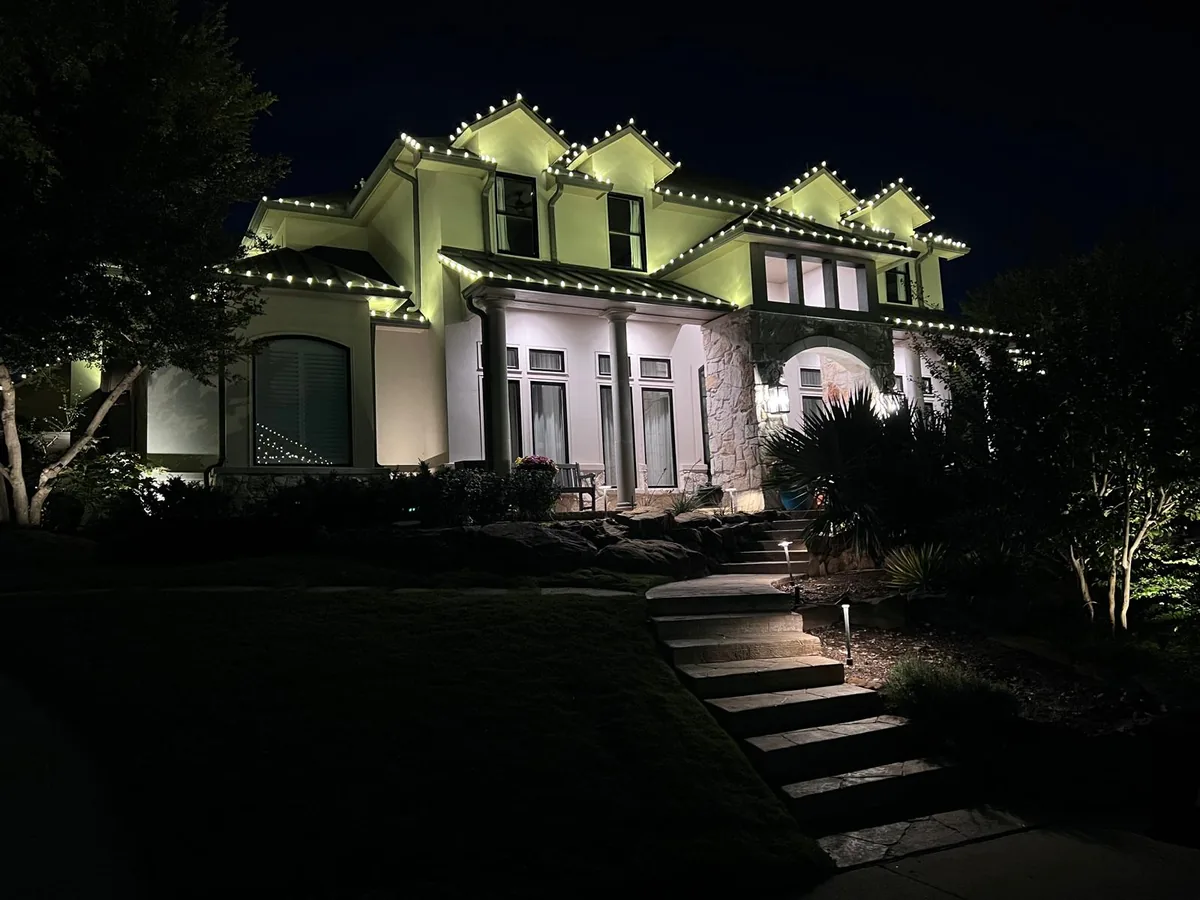
Book your install for a dry, mild weekday before Thanksgiving. Crews work safely and efficiently in daylight, and you avoid the late-November rush when the best installers are fully booked.
Early season advantages (early November)
Installations done in early November (November 1-10) often achieve the highest craftsmanship quality. Crews are fresh, not yet exhausted from peak-season volume. Weather is typically ideal: cool but not cold, dry, low wind. Daylight hours are still adequate (sunset around 5:30 PM in DFW November). Properties have less fall debris to navigate. Crews can spend extra time on detail work without schedule pressure. Customers in early-November installation windows get the most thorough installations. Returning customers and properties with complex requirements often request early-November dates specifically for this quality reason.
Peak season tradeoffs (mid-late November)
Mid-late November (November 15 through Thanksgiving) is the peak installation rush. Pros: most popular installation window, your lights are up for Thanksgiving family gatherings, the social proof of joining the holiday season with neighbors. Cons: crews are working longer hours and may be fatigued; weather can be variable (rain, wind, occasional cold snaps); scheduling flexibility is reduced; same-day reschedules from weather are more disruptive. Quality is still excellent — but the margin for extra detail work narrows. The vast majority of DFW installations happen during this peak window.
Late season considerations (December)
December installations have unique characteristics. Pros: typically open availability (most homes already installed); crews are experienced from full season work; you can sometimes negotiate slight discounts for late bookings (depending on installer). Cons: shorter daylight hours mean less work time per day; weather is often colder and may include occasional ice; you've missed the early-season family gathering displays; the social timing has passed. For new movers, December installations make sense. For most other customers, earlier is better.
Best time of day for installation work
Within a given day, professional installation crews typically prefer mid-morning starts (around 9-10 AM). Early morning has potential frost or dew on rooftops (slippery, dangerous). Mid-morning conditions are usually optimal: dry rooflines, good visibility, not too hot in early November. Afternoon work proceeds through optimal daylight. Most installations finish before sunset for safety reasons (working on roofs in darkness is dangerous). Evening installations are rare and typically only for very small additions to already-installed properties. Customers don't usually need to think about specific time of day — installers schedule that — but understanding the constraints helps explain installation timing.
Weather considerations specific to DFW
Texas weather is highly variable. Optimal installation conditions: dry, 50-70°F, light wind, full daylight. DFW November/December weather includes potential disruptions: severe thunderstorms (work paused, rescheduled); ice events (work paused, often delayed 1-2 days); high winds 25+ mph (working on roofs becomes unsafe); excessive heat early November can be uncomfortable but doesn't prevent work. Our crews monitor weather forecasts daily and proactively reschedule when needed. Customers receive notice as soon as we know schedule changes are required. Weather is the #1 reason for schedule adjustments.
Booking timing for different property types
Different property types have different booking timeline urgency. Estate-scale properties (Lucas, Parker, Westlake, Highland Park large estates): book by August. Multi-day projects with bucket trucks and large crews require longest lead time. Luxury master-planned communities (Stonebriar, Carillon, Vaquero Club, Phillips Creek Ranch): book by early September. Premium dates fill fastest. Standard residential luxury (Plano, McKinney, Frisco, Allen family homes): book by mid-September. Most flexibility through Labor Day weekend. Smaller homes and HOA properties: book by mid-October at latest. Less critical timing. Same-season last-minute (October-November): availability significantly reduced, especially for premium dates. We accommodate when possible but flexibility is limited.
How returning customer scheduling works
Returning customers automatically get priority over new customers. Returning customer scheduling begins in late spring/early summer with rebooking emails sent in June/July. Returning customers who confirm by August get preferred installation dates first. New customers booking in September can sometimes still get preferred dates, but increasingly take whatever dates remain. By October, returning customer dates are essentially locked. This priority system rewards loyalty and ensures customers who've trusted us for years get the best service experience year after year. Many of our returning customers have used us for 10+ consecutive years with the same approximate installation date every season.
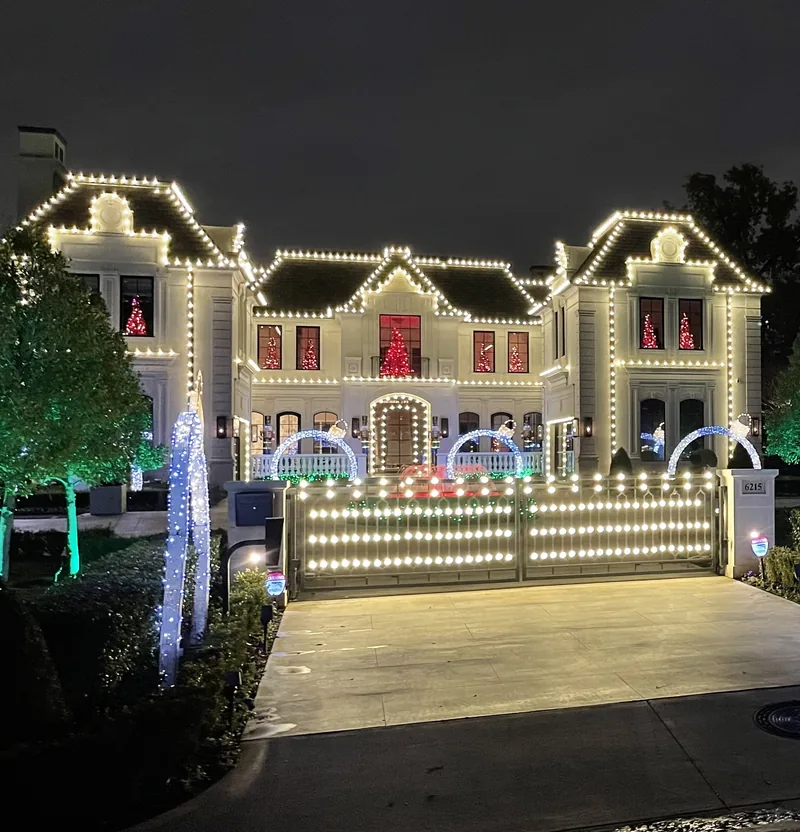
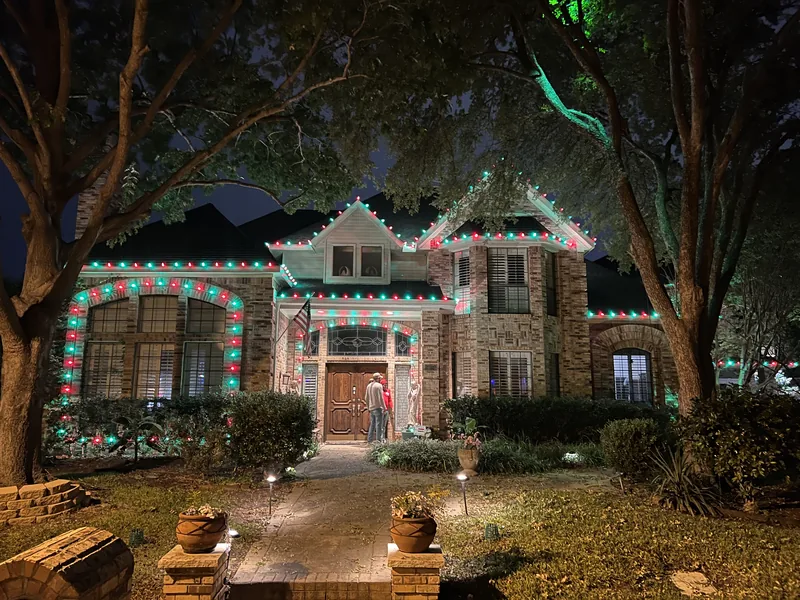
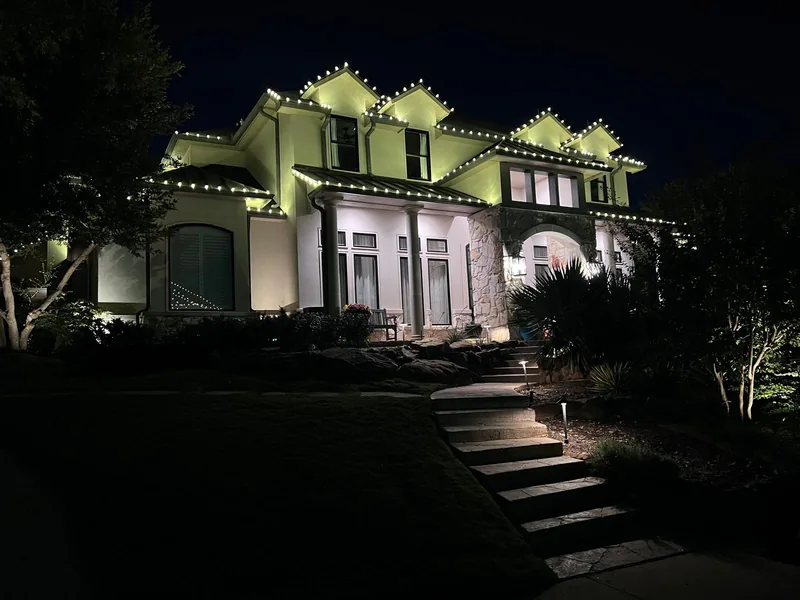
From single-story rooflines to tall two-story estates — every home professionally measured, installed, and taken down by our insured crews.
Frequently asked questions
When should I schedule my Christmas light installation in DFW?
For luxury market neighborhoods, book by August for best date selection. Most homeowners should book by mid-September. Early-November installations typically have the highest craftsmanship quality because crews are fresh. By Labor Day, peak November dates start filling rapidly.
Can Christmas lights be installed in cold weather?
Yes — professional installers work through cold weather as long as conditions are safe (no ice on roofs, manageable wind). Installation in cold (40°F and below) is harder on workers and slower, but quality remains excellent. Most DFW installations happen in 50-70°F November weather.
What time of day do you install Christmas lights?
Most professional installations start mid-morning (9-10 AM) after frost/dew is gone, and finish before sunset for safety. Work continues through full daylight hours. Specific timing for your installation is scheduled when we confirm your date.
Will rain delay my Christmas light installation?
Light rain may allow continued work; heavy rain, thunderstorms, or ice events trigger rescheduling. We monitor weather daily and proactively reschedule when needed. Customers receive notice as soon as we know weather-related schedule changes are required. Rescheduled installations typically happen within 1-3 days.
Can I get Christmas lights installed in December?
Yes, but availability is limited and choices may be restricted. December installations typically work best for new movers or customers adding to existing displays. Most preferred dates are booked by mid-November. New December installations may face shorter installation windows and less design consultation time.
Are there discounts for booking Christmas lights early or late?
Most installers don't offer early-booking discounts but DO give priority to returning customers and earlier bookings. Late-season (December) discounts are sometimes available but rare and inconsistent. Booking decisions should focus on quality and date preferences rather than waiting for discounts.
Ready for your custom DFW holiday lighting?
15+ years experience · 1,000+ DFW homes · 4.9★ Google rated · fully insured
The difference is in the details.
Three things separate professional luxury Christmas light installation from amateur work: materials, craftsmanship, and service relationship. Materials matter because commercial-grade C9 LED bulbs with sealed gaskets and polycarbonate shells last 10-15+ years compared to 2-3 seasons for big-box residential strands. The visible difference at the curb is significant — commercial-grade reads as crisp and elegant; residential-grade reads as fuzzy and inconsistent. Over many years, the cost difference is more than recovered through reliability.
Craftsmanship is where amateur installations fail and professional installations excel. Custom-cut C9 LED strands fitted exactly to your home's rooflines — every gable, dormer, valley, and architectural detail — create the magazine-quality holiday display that template installations simply cannot match. Every bulb evenly spaced. Every line clean. Every transition smooth. The lights look like they were designed for your home specifically, because they were.
Service relationship is what transforms transactional installation into long-term partnership. Free in-season service calls when something fails. January takedown and year-round storage so you store nothing. Lifetime warranty on installed LEDs. Returning customer priority and locked pricing. Same crew returning year after year, building deep familiarity with your home. The difference between installing Christmas lights once and being part of a homeowner's annual holiday tradition is real, and it's the difference our 500+ DFW customers come back for year after year.
Three ways to get started today.
Phone or Text
Call or text us directly at (469) 970-2715. Real person, same-day response, no obligation. Often the fastest path to a detailed quote.
Call now →Email thechristmaslightsexperts@gmail.com with your address and brief description. We respond same-day with detailed itemized pricing.
Get a Fast Quote →Online Quote Form
Submit our online quote form with property details. Convenient for thorough information sharing. Same-day response guaranteed.
📋 Quote form →For a simple roofline question or you're planning a full multi-acre estate installation, we respond same-day with the information you need. No high-pressure sales, no obligation, no follow-up calls if you decide not to proceed. Just honest professional service — which is why 86% of our tracked 2024–25 customers booked us again for 2025–26.

Ready for a
professional display?
Tell us about your home and we'll respond same day with a custom design and quote — concierge service, zero hidden fees, no obligation.
Or call/text directly: (469) 970-2715
Ready to make your home unforgettable?
Free same-day quote. No obligation. We respond fast and treat your home like our own.
Ready for a flawless display?
We design, install, maintain, and take down custom Christmas lighting across Dallas, Plano, Frisco & DFW — fully insured, fully managed.
Get a Free Quote →