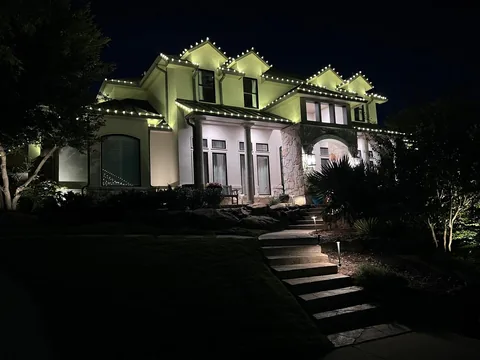
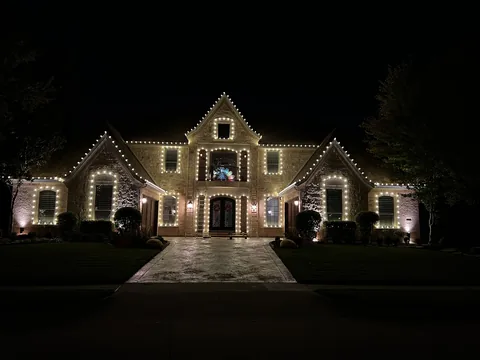
The visible difference at the curb
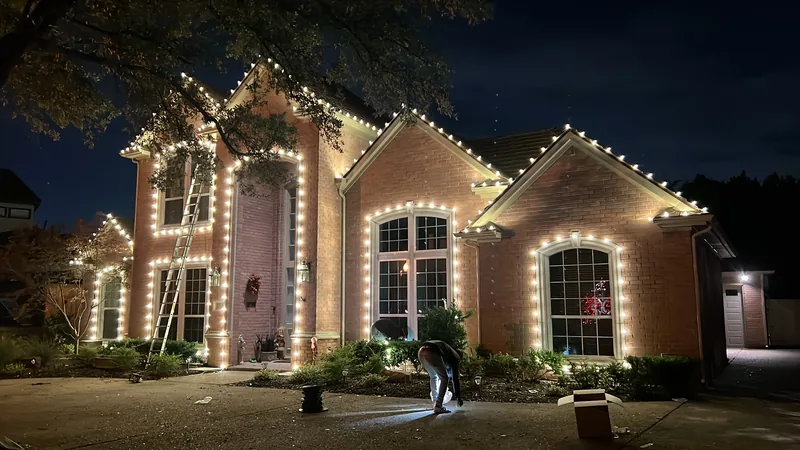
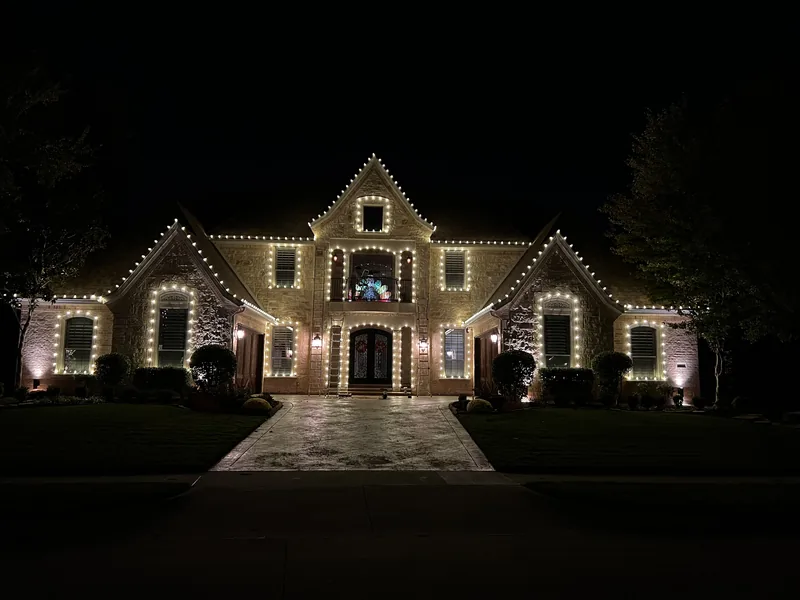
Stand on any DFW residential street during Christmas season and you can immediately tell which homes have commercial-grade C9 LED installations and which have cheap big-box mini lights. C9 LED creates large, distinct, evenly-spaced light points that read clearly from 100+ feet away. The bulbs themselves are visible — you can see the gold reflection of the metal sockets even during the day. Cheap mini lights create a fuzzy, indistinct glow that reads as 'some lights are there' without clear definition. From the curb, the visual difference is dramatic. From a passing car, C9 LED installations photograph well; mini light installations don't. The same home looks $50,000 more valuable lit with C9 LED versus mini lights. It’s the same math behind our professional Christmas light installation packages.
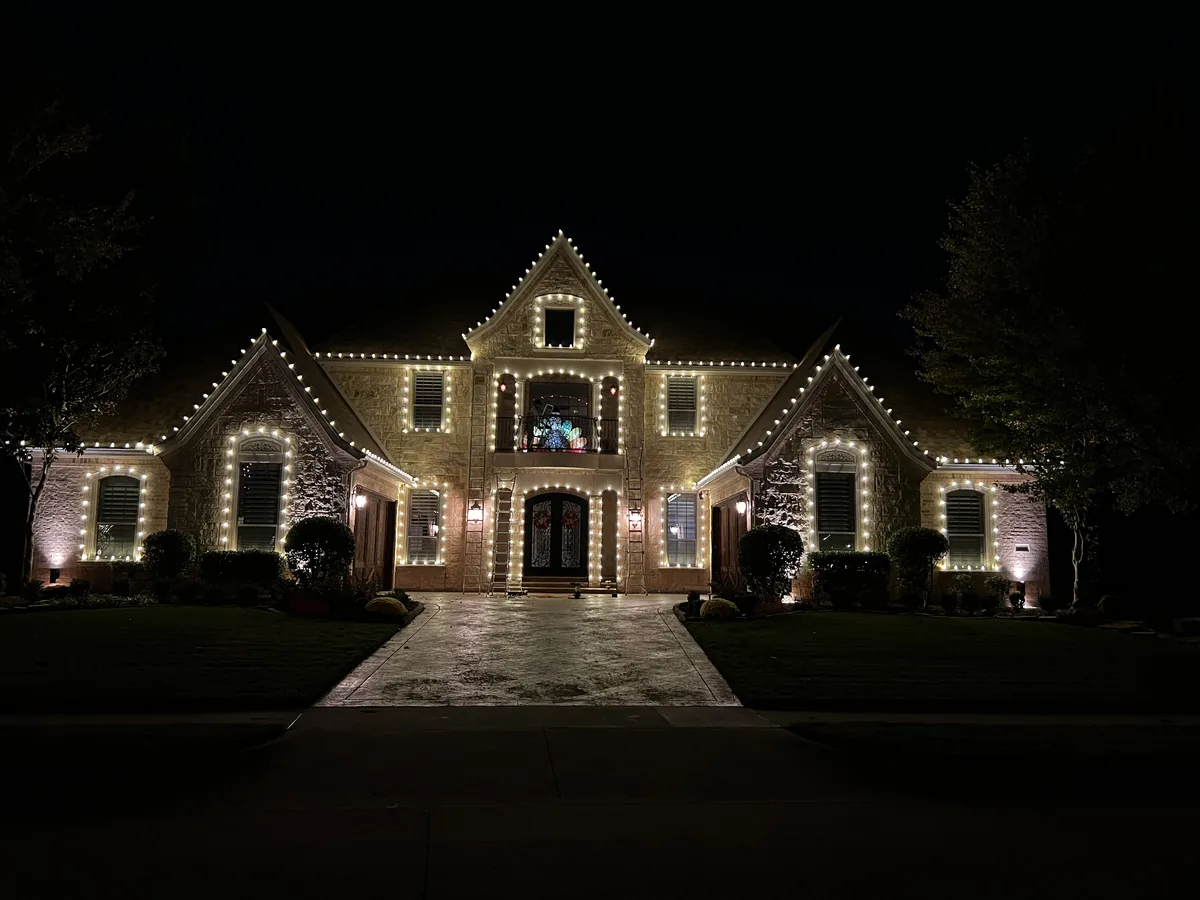
Year one covers the lights plus installation. Every year after, you only pay the lower install fee because you already own commercial-grade C9 LEDs that last 10–15 years — so the per-season cost keeps dropping.
Material differences: what makes commercial-grade different
Commercial-grade C9 LED has fundamentally different construction than residential big-box lights. The bulb itself: thick polycarbonate shell vs. thin plastic; sealed O-ring gaskets vs. exposed sockets; metallic bases that distribute heat vs. all-plastic construction. The wire: SPT-1 weatherproof rated wire designed for outdoor use vs. indoor-rated SPT-2 or thinner wire. The connections: weatherproof, reinforced connectors with strain relief vs. simple molded plugs. The sockets: replaceable individual sockets allowing single-bulb replacement vs. molded-in bulbs requiring strand replacement when one fails. These material differences explain the price difference. They also explain the durability and longevity difference.
Lifespan comparison: 2 years vs. 15 years
Big-box residential Christmas lights have a typical lifespan of 2-3 holiday seasons. They fail in predictable ways: bulbs burn out (you can't replace individual bulbs), wire insulation cracks, weatherproof seals fail letting moisture in, connectors corrode. Commercial-grade C9 LED installed by professionals has a typical lifespan of 10-15+ years. Individual bulbs can be replaced if they fail (extremely rare). Wire remains intact for decades. Sockets remain functional. Connectors stay sealed. Over a 15-year period, you'd buy 5-7 sets of cheap residential lights or one set of commercial C9 LED. The math favors commercial.
True cost over 10 years
Let's compare real costs over a decade. Cheap big-box residential lights for a typical 2,500 sq ft home: $300/year in lights (replacing every 2-3 years) + $0/year in labor (DIY) + your time (12-20 hours per installation) + ladder/safety risk + storage hassles. Year 1: $300 in lights, 16 hours of your time, 1 ladder fall risk. Year 5: $1,500 in lights total, 80 hours of your time total, 5 ladder fall risks. Year 10: $3,000 in lights total, 160 hours of your time total, 10 ladder fall risks. Plus the constant frustration of mid-season failures, partial outages, and replacement runs to the store.
Compare to professional C9 LED service
Professional installation with commercial-grade C9 LED for the same 2,500 sq ft home: $2,500/year all-inclusive (custom installation, in-season service, takedown, year-round storage, lifetime LED replacement). Year 1: $2,500 spent, 0 hours of your time, 0 ladder fall risk. Year 5: $12,500 total, 0 hours of your time total, 0 ladder fall risks. Year 10: $25,000 total, 0 hours of your time total, 0 ladder fall risks. Plus a consistently magazine-quality display, instant in-season service for any issues, and complete freedom from holiday lighting hassle. Comparing direct costs: $25,000 (pro) vs. $3,000 (DIY) over 10 years suggests DIY is cheaper. Comparing complete value (time + risk + aesthetic quality + service): pro is the better deal for most luxury homeowners by a wide margin.
The brightness factor
C9 LED bulbs produce significantly more light output (measured in lumens) than mini lights. A single C9 LED produces roughly 8-12 lumens of light. A single mini light produces roughly 1-2 lumens. To match the brightness of 100 C9 LEDs along a 50-foot roofline section, you'd need approximately 600-800 mini lights crammed into the same space. The C9 installation is cleaner, more elegant, and brighter. The mini light installation is messier and dimmer. For homeowners who want their home to be visible from a distance, C9 LED is essentially the only practical choice.
Energy efficiency: LED matters
Modern C9 LED bulbs consume roughly 0.96 watts per bulb. A typical 100-bulb installation consumes 96 watts — equivalent to a single old-fashioned 100-watt incandescent light bulb. For comparison, traditional incandescent C9 bulbs (still installed in some older properties) consume 7 watts per bulb — that same 100-bulb installation would consume 700 watts. LED installations cost roughly 7-8x less in electricity to operate over the holiday season. For DFW homeowners running displays for 8-10 hours per night for 60 nights, the electricity savings are real ($50-150 per season). Plus, LEDs run cool — eliminating the fire risk from heated incandescent bulbs against roofing materials.
Maintenance and service value
Cheap residential lights have zero service backing. When something fails, you're on your own — back to the store for replacement strands, climbing ladders to swap them out, no warranty support. Commercial-grade installation with professional service includes: free in-season service calls (anything fails, we come back same-day or next-day); lifetime LED replacement (any bulb that fails is replaced at our cost); annual installation and removal (no climbing); year-round storage (no garage clutter); annual design consultation (refresh look year over year). This service component is worth significantly more than the bulb material costs over 10 years.
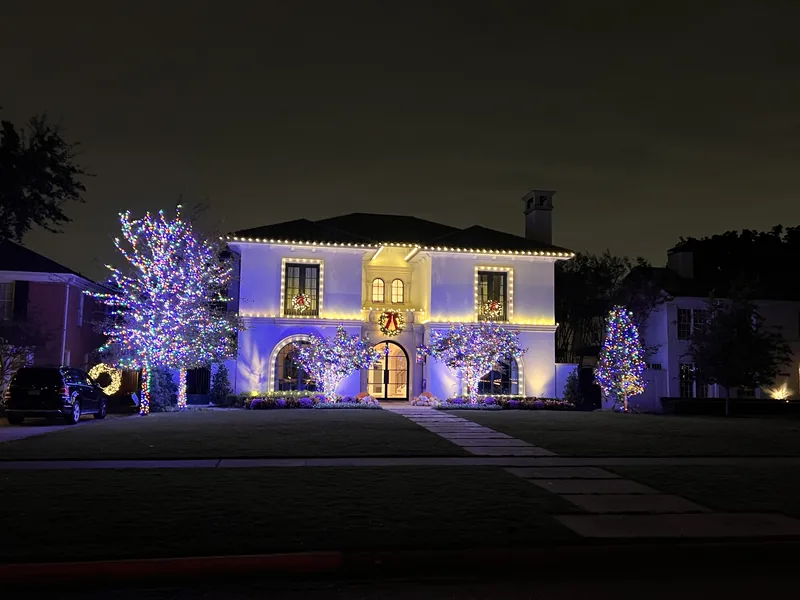
From single-story rooflines to tall two-story estates — every home professionally measured, installed, and taken down by our insured crews.
Frequently asked questions
Why are C9 LED Christmas lights more expensive than mini lights?
C9 LED uses commercial-grade materials: thick polycarbonate shells, sealed O-ring gaskets, SPT-1 weatherproof wire, replaceable sockets, reinforced weatherproof connectors. Cheap mini lights use thin plastic, indoor-rated wire, and molded-in bulbs. The price difference reflects the materials difference.
How long do C9 LED Christmas lights last?
Properly installed commercial-grade C9 LED lights last 10-15+ years with normal seasonal use. Individual bulbs (if they fail, which is rare) can be replaced without replacing the entire strand. Compare to 2-3 seasons for cheap big-box residential mini lights.
Are C9 LED lights brighter than mini lights?
Yes — significantly. C9 LED bulbs produce 8-12 lumens each compared to 1-2 lumens for mini lights. To match the brightness of 100 C9 LEDs along a 50-foot section, you'd need 600-800 mini lights crammed into the same space. C9 LED installations also look cleaner and more elegant.
Are LED Christmas lights more energy-efficient than incandescent?
Yes — LED bulbs consume roughly 7-8x less electricity than incandescent equivalents. A 100-bulb LED installation uses about 96 watts; the same 100-bulb installation in incandescent uses 700 watts. DFW homeowners save $50-150 per season in electricity by using LED.
What's the difference between residential and commercial Christmas lights?
Commercial-grade lights are designed for daily use over many years and have heavier materials, weatherproof connections, and replaceable components. Residential lights are designed for occasional decorative use and use lighter materials. Professional installers exclusively use commercial-grade materials.
Can professional Christmas light installers replace individual C9 LED bulbs?
Yes — commercial-grade C9 LED uses individual replaceable sockets, so any single bulb that fails can be swapped out without replacing the entire strand. This is impossible with cheap residential lights where bulbs are molded into the strand. Our installations include lifetime LED replacement at our cost.
Ready for your custom DFW holiday lighting?
15+ years experience · 1,000+ DFW homes · 4.9★ Google rated · fully insured
Bulb size at a glance
The bulb size debate comes up in every quote conversation we have with DFW homeowners. Here's the practical comparison most installers don't explain clearly:
- C9 bulbs — Approximately 1.25 inches tall × 1 inch diameter. Roughly the size of a small strawberry or a large grape. Visible from the curb. The premium standard for upscale rooflines in Highland Park, Preston Hollow, Westlake, and luxury Plano/Frisco neighborhoods.
- C7 bulbs — Approximately 1.5 inches tall × 0.75 inches diameter. Slightly smaller and more cone-shaped than C9. Common on older homes and budget installations. Often seen on covered porch lighting and indoor displays.
- Mini lights (M5/T5) — Tiny 5mm bulbs, the kind on Christmas trees indoors. Excellent for tree wrapping and bush nets — too small for rooflines, where they look like cluttered string from across the street.
The size difference matters more than people think. From 30 feet away (about the distance from the curb to your front door), C9 bulbs are clearly distinct individual points of light. C7 bulbs blur together. Mini lights look like a fuzzy line.
Brightness and color quality
Brightness isn't just about lumens — it's about how the light reads against a night sky and against architectural backdrops.
Commercial-grade C9 LED bulbs typically output 2-3 lumens per bulb. That's bright enough to be seen from a block away on a dark winter night, but soft enough that they don't blow out cameras or look like a strip mall. The proportions are right.
C7 LEDs run at 1-2 lumens per bulb. Adequate for short ranges but they wash out at distance — especially when the home is set back from the street, as luxury DFW estates often are.
Mini LEDs are usually 0.5-1 lumen per bulb. They're meant to be experienced close-up, not from across a yard. That's why they're perfect inside tree canopies (where you walk near them) and terrible on a roofline 40 feet up.
Color quality is where the gap widens. Premium C9 LEDs have higher CRI (color rendering index) — meaning their "warm white" looks like real candlelight or incandescent warmth, not the harsh blue-white of cheap LEDs. Same applies to multicolor: premium C9 reds are deep ruby, greens are forest green, blues are royal. Cheap mini lights have washed-out, pastel-leaning colors.
Durability and Texas weather
North Texas weather is brutal on Christmas lights. We get sudden temperature swings, ice storms, severe wind from northers blowing through, and occasional hailstorms even in December. Here's how the three bulb types hold up:
Commercial-grade C9 LED: Sealed bulb construction with O-ring gaskets at the socket. Polycarbonate shells resist hail and shatter-proof under most conditions. Wire jacket is SPT-1 or SPT-2 — rated for outdoor cold and UV exposure. Properly installed, these last 10-15+ years.
Residential C9 LED (big-box store): Thinner shell plastic, lower-grade wire, less weatherproofing. Lasts 2-4 seasons before bulbs start failing or wire cracks. Often built with shorter strand counts that require splicing — splices are weakness points.
C7 LED: Similar build quality to C9 but slightly more fragile due to smaller bulb design. Adequate for porches and covered areas; less ideal for full roofline exposure.
Mini lights: The wire is thinnest of the three types. Squirrels can chew through easily. Connections corrode over time. When one bulb fails on cheap mini strings, the whole section often goes dark — and finding the bad bulb is a needle-in-a-haystack exercise.
Energy consumption and cost
This is where modern LED tech changes the math compared to old incandescent bulbs:
A typical 2,500 sq ft Plano home with 150 linear feet of C9 LED roofline runs about 0.4-0.6 kWh per evening (6 hours of operation). At Texas electricity rates of $0.12/kWh, that's $0.05-0.07 per night, or roughly $4-6 for the entire 8-week holiday season. That's it. The old incandescent C9s consumed 10-15x more electricity.
A Highland Park estate with 400 linear feet of C9 LED, plus 4 wrapped trees and garland, might run 1-2 kWh per evening — $10-25 total for the entire season. Trivial compared to the visual impact.
Compare this to old incandescent C9: a single bulb pulled 7 watts. 150 feet of strand (75 bulbs) pulled 525 watts. Running 6 hours/night for 60 days = 189 kWh = ~$23 in electricity. And the bulbs would burn out constantly. LED math wins.
The winning combination for DFW homes
For most DFW luxury homes, the winning lighting combination is:
- C9 LED on all rooflines — gables, dormers, eaves, valleys. Custom-cut to fit your home exactly.
- Mini LED on tree wrapping — perfect scale for trunks and canopies. Warm white classic or multicolor festive.
- C9 LED on porch garland and column wraps — keeps the look unified with the roofline.
- Net mini lights on bushes and topiaries — quick to install, perfect ambient glow at ground level.
This combination gives you the bold architectural statement of C9 from a distance, plus the magical textural detail of mini lights up close as guests walk to your door. It's how luxury DFW estates achieve "wow" from the curb AND "magical" from the front step.
If you're working within a tighter budget, start with C9 roofline only. Add mini lights for tree wrapping in year two. Add accent lighting and garland in year three. Most of our long-term customers built their displays incrementally over 2-3 seasons.
What we recommend (and why)
Our standard recommendation for every new DFW residential customer is commercial-grade C9 LED. We don't install C7 at all (the size disadvantage isn't worth the marginal cost savings), and we use mini LEDs only for tree wrapping and shrub nets.
Why? Because the price difference between C9 and C7 is only about 10-15%, and the visual impact difference is 50%+. C9 just looks dramatically better at the curb-side viewing distances most homes need.
For a deeper dive on the specific service, see our C9 LED installation page. For tree wrapping details, see our tree wrapping service. For typical pricing in your area, check our DFW pricing guide.
Have questions about which bulb is right for your specific home? Call us at (469) 970-2715 — we'll walk through your property over the phone or schedule a free in-person consultation.
The difference is in the details.
Three things separate professional luxury Christmas light installation from amateur work: materials, craftsmanship, and service relationship. Materials matter because commercial-grade C9 LED bulbs with sealed gaskets and polycarbonate shells last 10-15+ years compared to 2-3 seasons for big-box residential strands. The visible difference at the curb is significant — commercial-grade reads as crisp and elegant; residential-grade reads as fuzzy and inconsistent. Over many years, the cost difference is more than recovered through reliability.
Craftsmanship is where amateur installations fail and professional installations excel. Custom-cut C9 LED strands fitted exactly to your home's rooflines — every gable, dormer, valley, and architectural detail — create the magazine-quality holiday display that template installations simply cannot match. Every bulb evenly spaced. Every line clean. Every transition smooth. The lights look like they were designed for your home specifically, because they were.
Service relationship is what transforms transactional installation into long-term partnership. Free in-season service calls when something fails. January takedown and year-round storage so you store nothing. Lifetime warranty on installed LEDs. Returning customer priority and locked pricing. Same crew returning year after year, building deep familiarity with your home. The difference between installing Christmas lights once and being part of a homeowner's annual holiday tradition is real, and it's the difference our 500+ DFW customers come back for year after year.
Three ways to get started today.
Phone or Text
Call or text us directly at (469) 970-2715. Real person, same-day response, no obligation. Often the fastest path to a detailed quote.
Call now →Email thechristmaslightsexperts@gmail.com with your address and brief description. We respond same-day with detailed itemized pricing.
Get a Fast Quote →Online Quote Form
Submit our online quote form with property details. Convenient for thorough information sharing. Same-day response guaranteed.
📋 Quote form →For a simple roofline question or you're planning a full multi-acre estate installation, we respond same-day with the information you need. No high-pressure sales, no obligation, no follow-up calls if you decide not to proceed. Just honest professional service — which is why 86% of our tracked 2024–25 customers booked us again for 2025–26.

Ready for a
professional display?
Tell us about your home and we'll respond same day with a custom design and quote — concierge service, zero hidden fees, no obligation.
Or call/text directly: (469) 970-2715
Ready to make your home unforgettable?
Free same-day quote. No obligation. We respond fast and treat your home like our own.
Ready for a flawless display?
We design, install, maintain, and take down custom Christmas lighting across Dallas, Plano, Frisco & DFW — fully insured, fully managed.
Get a Free Quote →