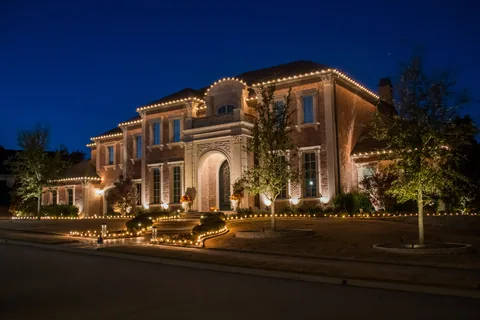
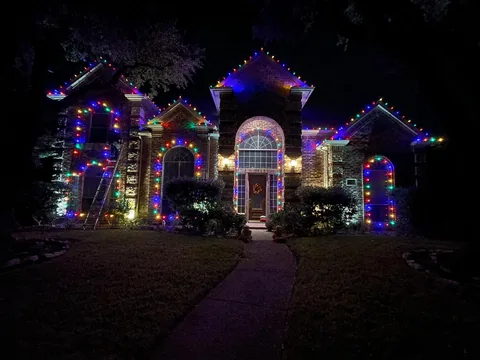
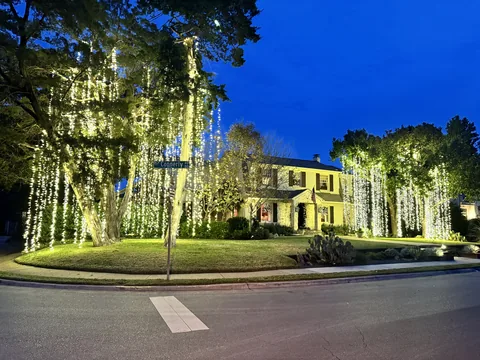
Hanging Christmas lights on your house looks simple until you're balancing on a ladder in 38-degree wind, holding a tangled strand, trying to keep your roofline straight. This guide walks you through exactly how the pros do it — the tools, the technique, and the safety steps — so you can decide whether to tackle it yourself or hand it off. If any step below feels risky, our Christmas light contractors do this every day with commercial-grade gear.
What you'll need before you start
Doing this right starts with the right materials. Skipping these is the difference between a crisp roofline and a droopy, uneven mess that falls down in the first North Texas cold front.
- Outdoor-rated lights. C9 LED strands are the professional standard — bright, energy-efficient, and weather-sealed. Avoid indoor mini lights outside; they fade and fail fast.
- All-in-one plastic light clips. Never use staples, nails, or hot glue. Clips designed for your shingle or gutter type hold the strand straight and come down cleanly in January.
- A sturdy extension ladder rated for your height, plus a spotter to hold it.
- Outdoor extension cords and a timer rated for exterior use, plus a GFCI outlet.
- A tape measure — measure your roofline before you buy, so you don't run short halfway across the house.
Before you climb anything, measure every roofline, gable, and edge you want lit. Add it all up, then buy 10-15% more strand than you think you need — corners, gaps, and outlet runs eat length faster than people expect. Sketch where your power source is; you'll want the strand to end near a GFCI outlet so the plug and timer aren't dangling across the yard.
This is the trick most homeowners miss. Clip your bulbs into the light clips before you go up the ladder, working in sections on the ground. It means less fumbling at height and a much faster, safer install. Space bulbs evenly — typically every 12 inches for C9 — so the line reads clean from the curb.
Set your ladder on firm, level ground at the correct angle (roughly one foot out for every four feet up). Have a spotter. Never reach beyond arm's length — climb down and move the ladder instead. Clip the strand to the edge of your roofline or gutter, working in the sections you pre-assembled. Keep the line taut and follow the architectural edge for that crisp, professional look.
Plug into a GFCI-protected outdoor outlet. Don't exceed the manufacturer's max run length per circuit (for C9 LED this is usually generous, but check). Add an outdoor timer set to dusk-to-late-evening so you're not running lights at 3am or remembering to flip a switch every night. Test the full display before you take the ladder down — a single dead section is far easier to fix while you're still set up.
When the season ends, takedown is the reverse — and the part people dread most. Wrap strands around a reel or piece of cardboard rather than balling them up; tangled, kinked strands are the #1 reason lights fail the next year. Store clips in labeled bags. Or, if January ladder-climbing in the cold sounds miserable, this is another point where a full-service installer earns their fee.
The CPSC reports thousands of holiday-decorating injuries every year, most from ladder falls. Two-story rooflines, steep pitches, and icy mornings dramatically raise the risk. If your home is tall or your roof is steep, this is the point where most people call a professional — and it's the right call.
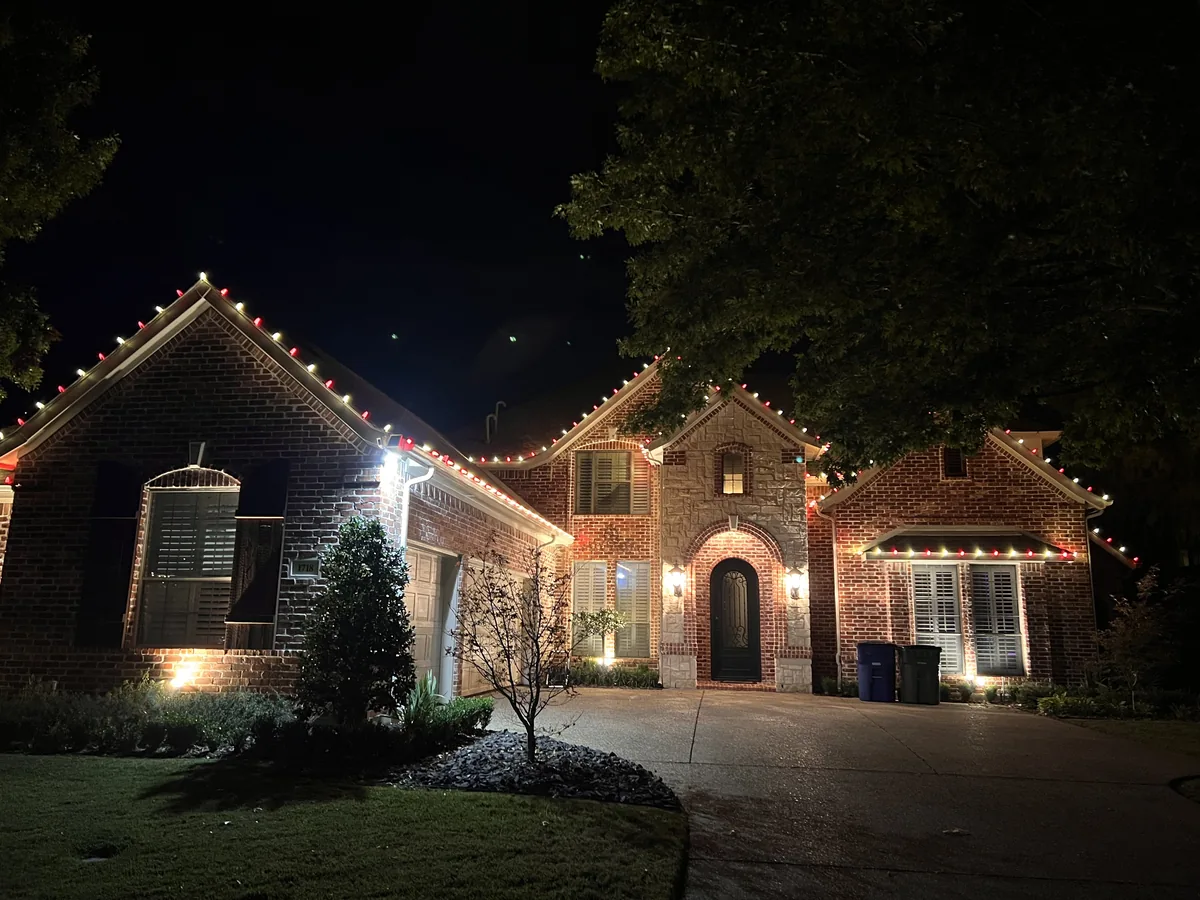
How to hang Christmas lights on different surfaces
The right attachment method depends on what your home is made of — and getting it wrong is how people damage their facade or end up with lights falling mid-December. Here is how we approach the most common DFW exteriors.
| Surface | Best attachment method | Avoid |
|---|---|---|
| Gutters / gutter guards | All-in-one plastic gutter clips (grip lip + guard edge) | Standard clips that pop off guards |
| Stucco | Removable exterior adhesive clips on fascia/trim, or clip to the gutter line | Drilling or nailing — cracks invite water |
| Brick | Brick clips that grip the mortar lip | Adhesive hooks — bond fails in cold |
| No gutter / mixed | Shingle tabs + exterior adhesive clips | Nails & staples — pierce the wire jacket |
How to hang Christmas lights on gutters and gutter guards
For homes with gutters, all-in-one plastic gutter clips slide over the lip and hold a C9 line cleanly along the roofline — no tools, no holes. If you have gutter guards, use clips designed to grip both the gutter lip and the guard edge (standard clips can pop off guards). This is the most secure, damage-free method and the one we use most across North Texas.
How to hang Christmas lights on stucco
Stucco is common on DFW homes and needs care — never drill or nail into it, as cracks invite water damage. Use removable adhesive clips rated for exterior use on the fascia or trim boards rather than the stucco surface itself, or clip to the gutter line above. For stucco eaves with no gutter, brick clips on the adjacent trim are the safest anchor.
How to hang Christmas lights on brick
For brick, use brick clips that grip the mortar lip — they hold securely without drilling and pull off cleanly in January. Avoid adhesive hooks on brick; the rough surface breaks the bond in cold weather and your lights sag.
How to hang Christmas lights without nails
You almost never need nails. Between gutter clips, shingle tabs, and exterior adhesive clips, every common surface has a no-damage option. Nails and staples pierce the wire jacket — a shock and fire risk — so we never use them. If a surface seems to have no clean anchor point, that is usually the sign to bring in a professional installer who has the right hardware for your home.
Most holiday-decorating injuries come from ladder falls — which is exactly why two-story rooflines are the line where DIY stops making sense.The Christmas Lights Experts
DIY vs. hiring a professional: the honest math
DIY makes sense for single-story homes, modest runs, and homeowners comfortable on a ladder. You'll save on labor, though quality outdoor materials still cost more than people expect.
Professional installation makes sense when your home is two stories or more, your roofline is complex, you want a flawless custom look, or you simply don't want to spend two cold weekends on a ladder — twice (once to hang, once to take down). A professional Christmas light installation service handles design, commercial-grade materials, install, in-season repairs, takedown, and storage. In Dallas-Fort Worth, professional installs typically start around $750 for residential homes — see our full pricing breakdown for what drives the number.
Rather skip the ladder?
We design, install, maintain, and take down custom Christmas lighting across Dallas, Plano, Frisco, and DFW — fully insured, fully managed.
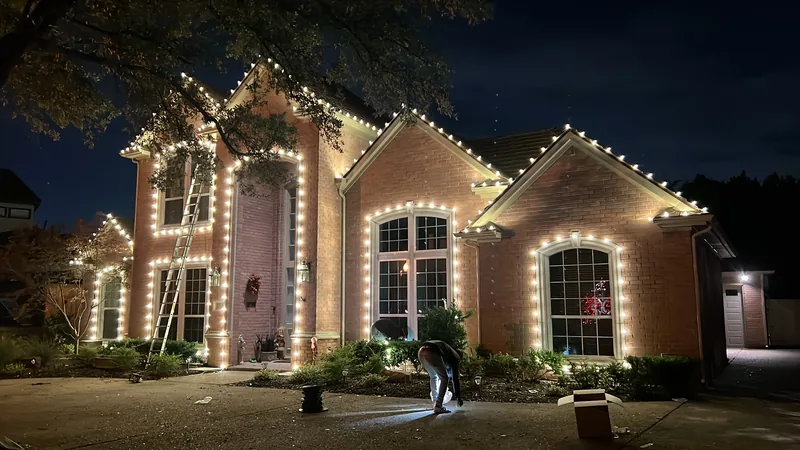
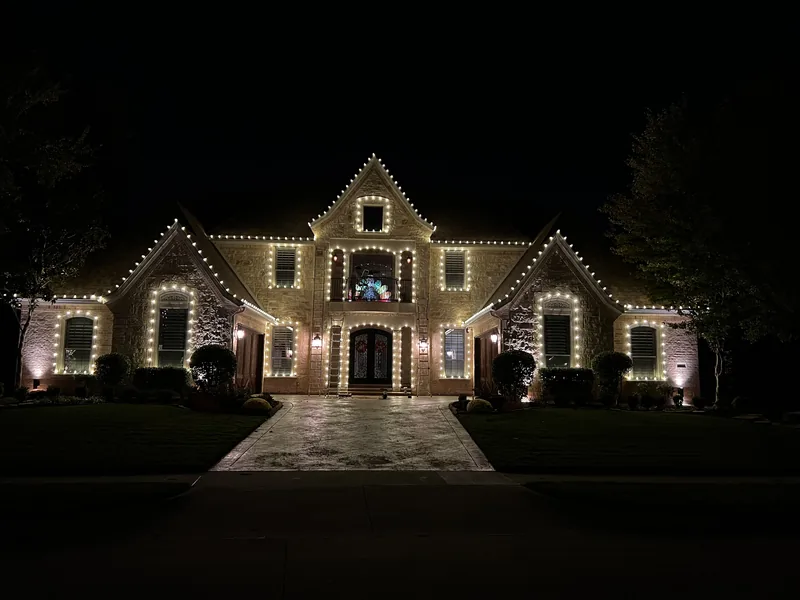
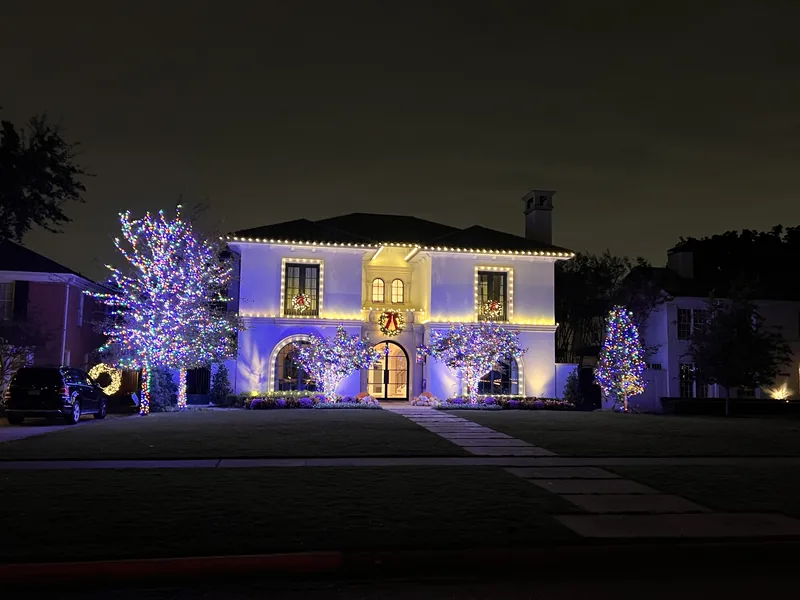
Get a Free Quote →From single-story rooflines to tall two-story estates — every home professionally measured, installed, and taken down by our insured crews.
Frequently asked questions
What's the best way to attach Christmas lights without damaging my house?
Use all-in-one plastic light clips designed for your roofline or gutter. They grip the shingle edge or gutter lip without nails, staples, or adhesive, so there's no damage and takedown is clean. Never use staples or hot glue — both damage your home and shorten the life of the strand.
How many Christmas lights can I connect end to end?
It depends on the wattage of your strand and the manufacturer's rating. LED strands draw far less power than incandescent, so you can usually run many more in series — often several hundred feet — but always check the package and never exceed the stated maximum, which is a fire risk.
Is it safe to hang Christmas lights on a two-story house myself?
It's significantly riskier. Most holiday-decorating injuries come from ladder falls, and two-story rooflines, steep pitches, and cold or icy conditions raise the danger. If you're not fully comfortable and equipped, a professional installer with the right equipment is the safer choice.
When should I hang Christmas lights in Texas?
Most DFW homeowners install between early November and Thanksgiving, while the weather is still mild and ladders are safer. Booking a professional installer in October secures the best scheduling before the December rush.
How do I keep my Christmas lights from falling down?
Proper clips sized to your roofline, evenly spaced and fully seated, are the key. Lights fall when people use the wrong clip type, space them too far apart, or don't seat them on the shingle edge. A taut, well-clipped line will hold through North Texas wind and cold fronts all season.
How do you hang Christmas lights on stucco without damaging it?
Never drill or nail into stucco — it cracks and lets water in. Use exterior-rated removable adhesive clips on the fascia or trim boards, or clip to the gutter line above the stucco. For stucco eaves with no gutter, attach brick or trim clips to the adjacent wood trim instead of the stucco surface itself.
How do you hang Christmas lights with gutter guards?
Use clips designed to grip both the gutter lip and the guard edge — standard gutter clips can pop off guards. These specialty clips hold a C9 line securely along the roofline with no drilling or holes, which is why they're the most popular damage-free method on DFW homes.
Three ways to get started today.
Phone or Text
Call or text us directly at (469) 970-2715. Real person, same-day response, no obligation. Often the fastest path to a detailed quote.
Call now →Email thechristmaslightsexperts@gmail.com with your address and brief description. We respond same-day with detailed itemized pricing.
Get a Fast Quote →Online Quote Form
Submit our online quote form with property details. Convenient for thorough information sharing. Same-day response guaranteed.
📋 Quote form →For a simple roofline question or you're planning a full multi-acre estate installation, we respond same-day with the information you need. No high-pressure sales, no obligation, no follow-up calls if you decide not to proceed. Just honest professional service — which is why 86% of our tracked 2024–25 customers booked us again for 2025–26.

Ready for a
professional display?
Tell us about your home and we'll respond same day with a custom design and quote — concierge service, zero hidden fees, no obligation.
Or call/text directly: (469) 970-2715
Ready to make your home unforgettable?
Free same-day quote. No obligation. We respond fast and treat your home like our own.