If you're choosing Christmas lights this year, the LED-versus-incandescent decision affects everything: your power bill, how long the lights last, how they look, and how safe they are. Here's the honest, no-jargon breakdown of how they really compare.
The quick answer
For nearly every outdoor application, LED wins — they use up to 90% less energy, last many times longer, run cool, and resist weather and breakage. Incandescent lights are cheaper up front and some people prefer their warm glow, but they cost more to run, burn out faster, and run hot. Below is what actually drives the choice.
LEDs win on nearly every measure: about 90% less energy, no hot bulbs, far longer life, and more strands safely connected end-to-end. Incandescent only wins on a slightly warmer vintage glow — and even that's closing.
Energy use: the running-cost difference
This is the headline. LED Christmas lights draw a tiny fraction of the power incandescent bulbs do — often around 80-90% less. Over a full season of dusk-to-late-evening runtime across a whole house, that's a real, noticeable difference on your December electric bill. (We've run the full Texas math — watts per bulb, season cost, the works — in our guide to how much electricity Christmas lights use.) It also means you can safely connect far more LED strands end-to-end on a single circuit.
Lifespan: years vs. seasons
Incandescent bulbs have a filament that burns out — and on series-wired strands, one failure can darken a whole section. Quality LED strands have no filament and can last many seasons, which is why professional installers use commercial-grade LED almost exclusively. If you've ever spent an evening hunting for the one dead bulb that killed your strand, you already understand the appeal.
Safety: heat matters
Incandescent bulbs get hot — a genuine consideration on a dry Christmas tree or near flammable décor. LEDs run cool to the touch, which makes them meaningfully safer for both indoor trees and long outdoor runs. For homes with kids, pets, or live greenery, this alone often settles the question.
Appearance: the one place it's a real debate
Older LEDs had a cold, bluish cast that many people disliked — that's where incandescent's warm reputation comes from. But modern warm-white LED closely mimics the cozy glow of incandescent while keeping all the efficiency and longevity benefits. If you loved the old incandescent look, warm-white LED is what you want now. Cheaper LEDs still look cold, so quality matters here.
Cost over time
Incandescent wins on the price tag at the store. LED wins on total cost: lower power bills, far fewer replacements, and years of reuse. Spread over the life of the lights, LED is typically the cheaper choice — and the gap widens every season you reuse them.
LED vs. incandescent: side by side
Here is the honest comparison across the factors that actually matter for an outdoor holiday display:
| Factor | LED | Incandescent |
|---|---|---|
| Energy use | ~90% less | High — adds up over a season |
| Lifespan | 10–15+ years | 1–3 seasons typical |
| Heat | Cool to the touch | Hot — a real fire risk |
| Strands per circuit | Many (low draw) | Few before tripping |
| Durability | Shatter-resistant | Fragile glass bulbs |
| Glow / warmth | Excellent (warm-white LEDs) | Classic warm glow |
Common myths about LED Christmas lights
A few outdated beliefs keep people on incandescent longer than they should:
- "LEDs look cold and blue." True a decade ago, not today. Modern warm-white LEDs are nearly indistinguishable from the classic incandescent glow.
- "LEDs are too expensive." They cost more per strand up front, but the energy savings and 10–15 year lifespan make them far cheaper over time.
- "All LEDs are the same." Retail-grade and commercial-grade LEDs are worlds apart in brightness, color consistency, and weather sealing.
What professionals use
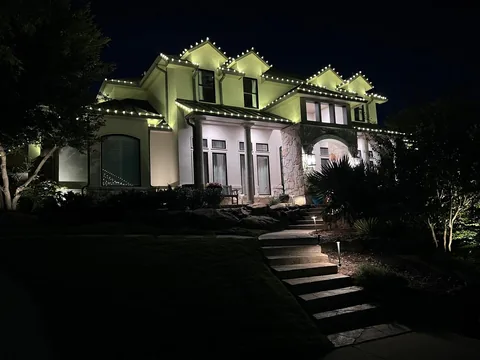
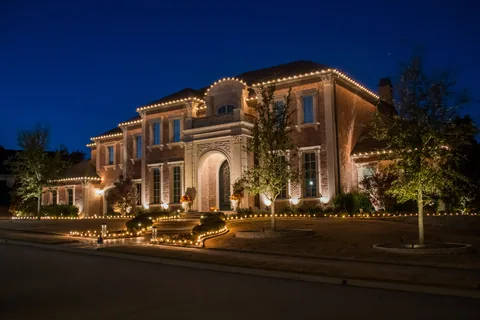
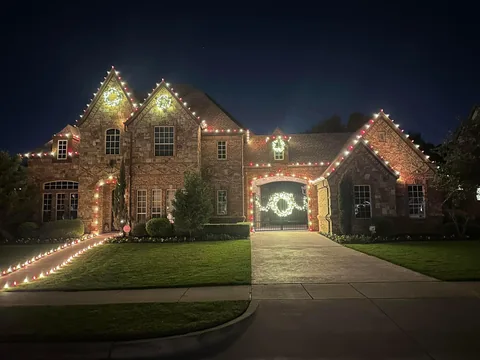
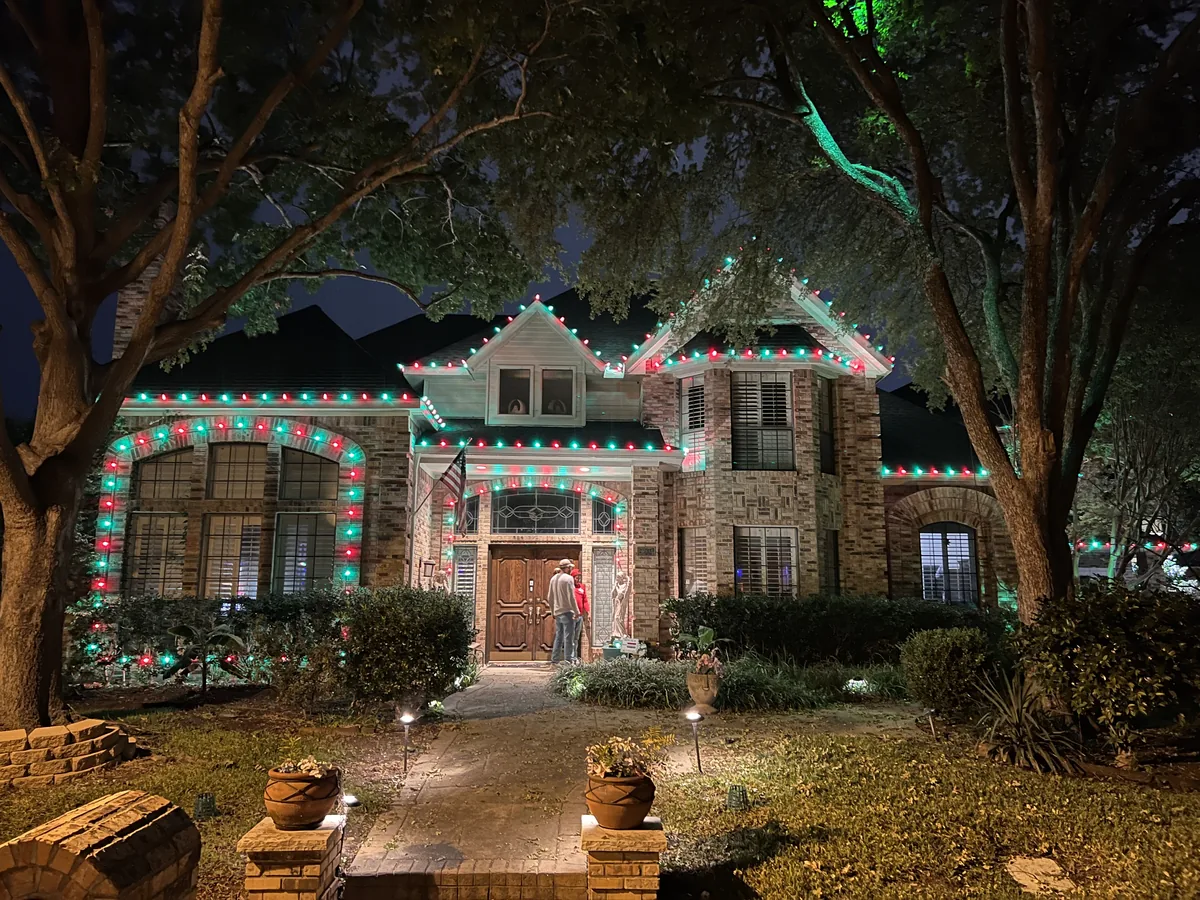
The C9 LED bulb is the professional standard for rooflines: bright, weather-sealed, efficient, and available in warm white and rich colors. It delivers the classic large-bulb look with all the LED advantages. If you want to understand why, our C9 LED guide breaks it down.
Want commercial-grade LED, professionally installed?
We use premium warm-white and color C9 LED across DFW — the efficiency and longevity of LED with the classic look you want.
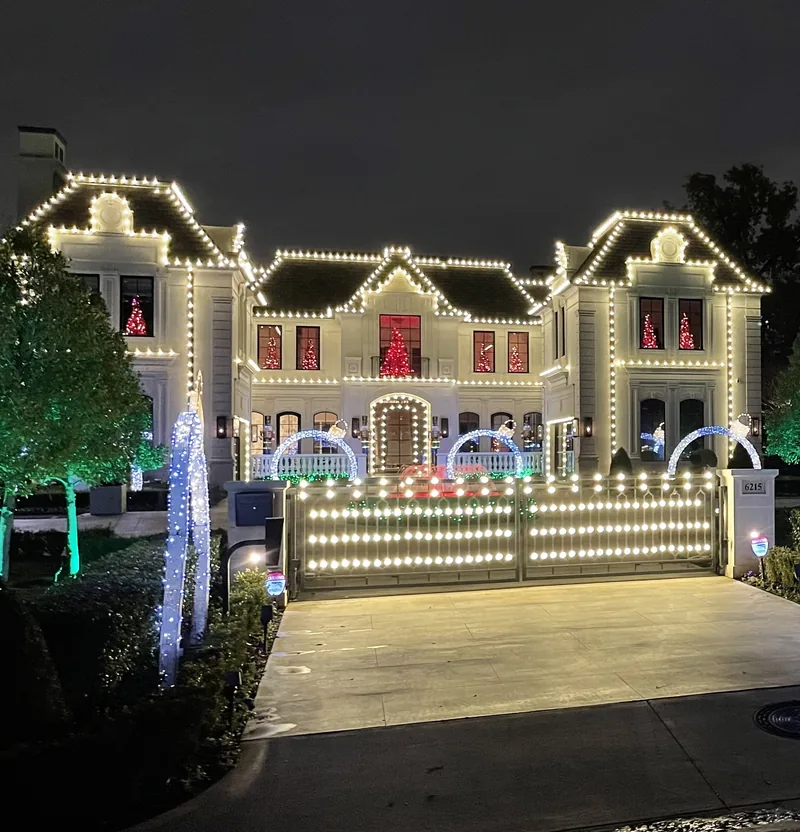
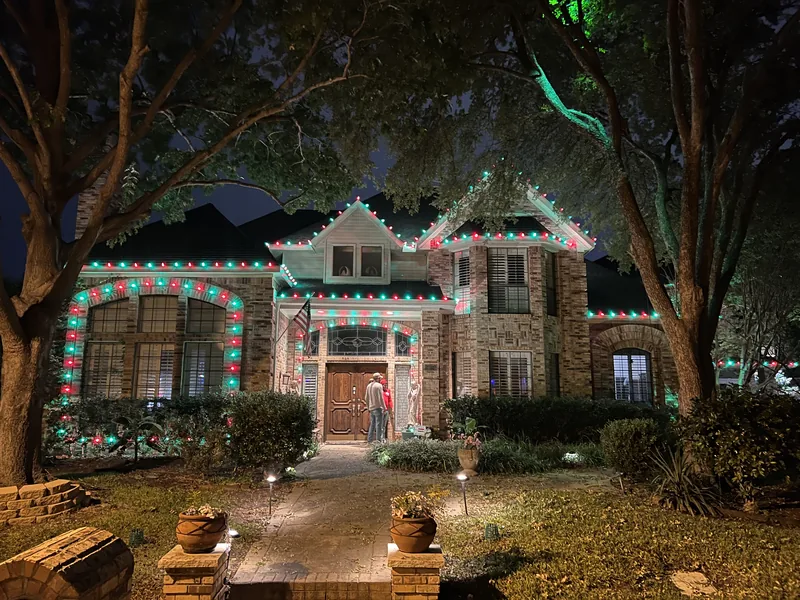
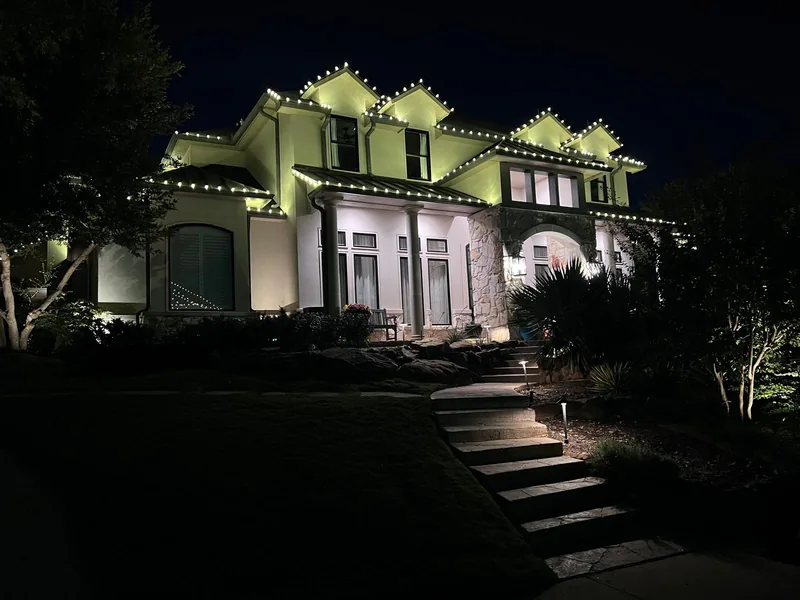
Get a Free Quote →From single-story rooflines to tall two-story estates — every home professionally measured, installed, and taken down by our insured crews.
Frequently asked questions
Are LED or incandescent Christmas lights better?
For almost every use, LED is better — up to 90% less energy, far longer lifespan, cooler and safer operation, and better weather resistance. Incandescent is cheaper up front but costs more to run and replace.
Do LED Christmas lights look as warm as incandescent?
Modern warm-white LED closely mimics the cozy glow of incandescent. Older and cheaper LEDs can look cold and bluish, so quality matters — but a good warm-white LED gives you the classic look with all the efficiency benefits.
Do LED Christmas lights really save money?
Yes, over time. They cost more at the store but use far less power and last many more seasons, so total cost — energy plus replacements — is typically lower, and the savings grow each year you reuse them.
Are LED Christmas lights safer than incandescent?
Generally yes. LEDs run cool to the touch, while incandescent bulbs get hot — a real consideration near dry trees, greenery, kids, or pets, and over long outdoor runs.
Three ways to get started today.
Phone or Text
Call or text us directly at (469) 970-2715. Real person, same-day response, no obligation. Often the fastest path to a detailed quote.
Call now →Email thechristmaslightsexperts@gmail.com with your address and brief description. We respond same-day with detailed itemized pricing.
Get a Fast Quote →Online Quote Form
Submit our online quote form with property details. Convenient for thorough information sharing. Same-day response guaranteed.
📋 Quote form →For a simple roofline question or you're planning a full multi-acre estate installation, we respond same-day with the information you need. No high-pressure sales, no obligation, no follow-up calls if you decide not to proceed. Just honest professional service — which is why 86% of our tracked 2024–25 customers booked us again for 2025–26.

Ready for a
professional display?
Tell us about your home and we'll respond same day with a custom design and quote — concierge service, zero hidden fees, no obligation.
Or call/text directly: (469) 970-2715
Ready to make your home unforgettable?
Free same-day quote. No obligation. We respond fast and treat your home like our own.